You may think pressure washers are complicated, expensive, or hard to control. But good news – they’re not! Pressure washing is an easy, affordable, and TOTALLY AWESOME way to keep your outdoor spaces looking clean and fresh. This is a comprehensive start-to-finish guide for anyone ready to get their pressure washing feet wet (maybe even literally). We’ll cover set-up, spraying tips, surfaces it works on, and more.
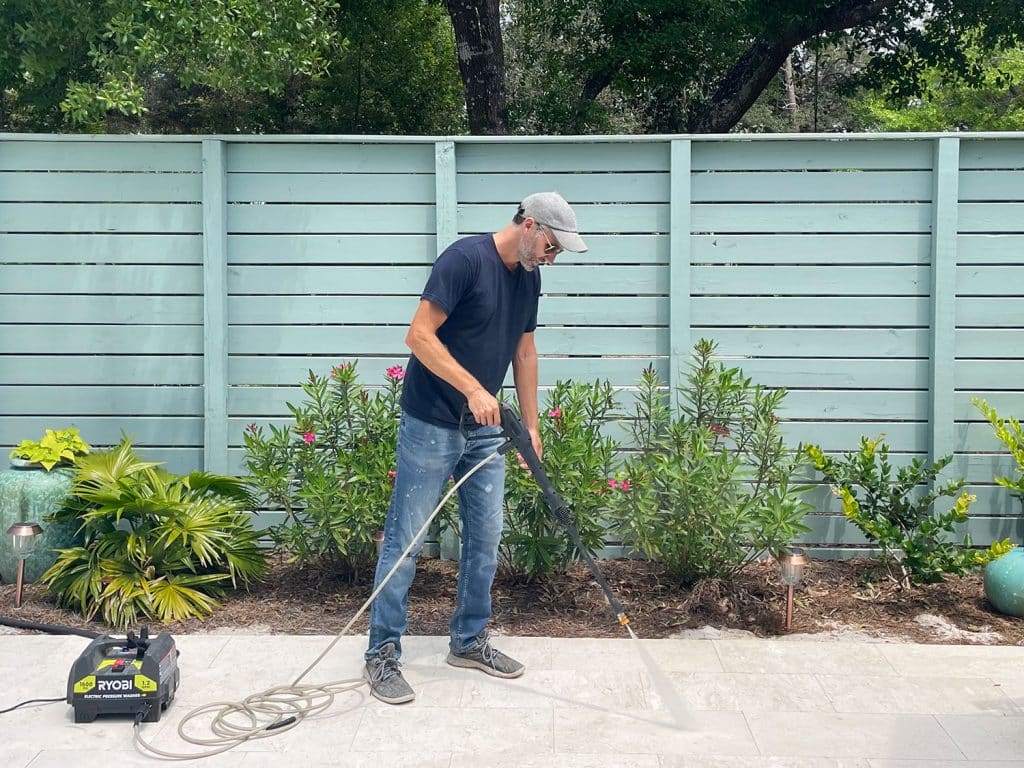
Trust us, even we were intimidated the first time we tried pressure washing over 10 years ago. The cumbersome gas-powered machine we rented for a day was so big it didn’t even fit in our car! So I TOTALLY understand anyone with PWH (pressure washing hesitation).
Table of Contents
Our Favorite Pressure Washer
The key to easy pressure washing is using a super compact and simple to use – this $199 electric pressure washer from Ryobi. We bought it for our beach house in 2018, and when we moved, we opted to bring it with us instead of an older/larger version we used at our main house. This one is so compact, reliable, and (most importantly) GOOD AT CLEANING, it became our preferred power washer.
It has just the right amount of pressure to get the job done, without being bulky or difficult to control (both Sherry and I use it without any trouble). It’ll make a pressure washing convert out of just about anyone. Also, we bought it with our own money, so nothing about this post is sponsored in any way.
There are definitely more powerful (and more expensive) options out there, but this pressure washer has always met our needs. Always. In fact, we don’t even use it on its highest setting. So, unless you have a special need for something more intense, this is a fantastic option.
A Beginner’s Video Guide To Pressure Washing
The video below covers set-up, use, and storage of your pressure washer. Oh yeah and there’s lots of that sweet sweet pressure washing footage that everyone’s eyeballs can’t help but love. And more importantly, several cameos by our chihuahua, Penny.
Note: You can also view this video on YouTube.
Setting Up Your Electric Pressure Washer
The box for our favorite pressure washer includes everything shown below. You just need to supply water (via a garden hose) and power (via a standard outlet). And, as we show in the video above, set-up is pretty much as easy as just connecting those two things!
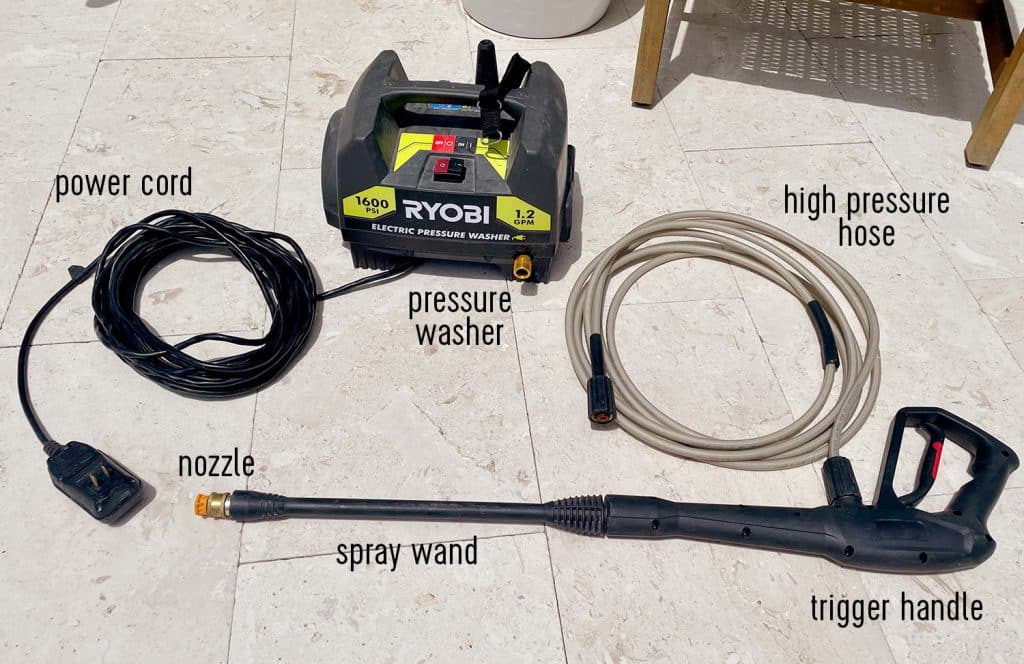
Follow these 8 steps to get your new pressure washer ready to go. They’re fast and easy!
- Assemble the wand
- Connect the high-pressure hose
- Connect the garden hose
- Select & attach your nozzle
- Turn on the hose
- Plug in to power
- Turn on power & begin!
Step 1: Assemble the Wand
We typically store our wand and trigger handle assembled, but coming fresh out of the box, you’ll need to lock these two pieces together with a simple twist.
Step 2: Connect the High-Pressure Hose
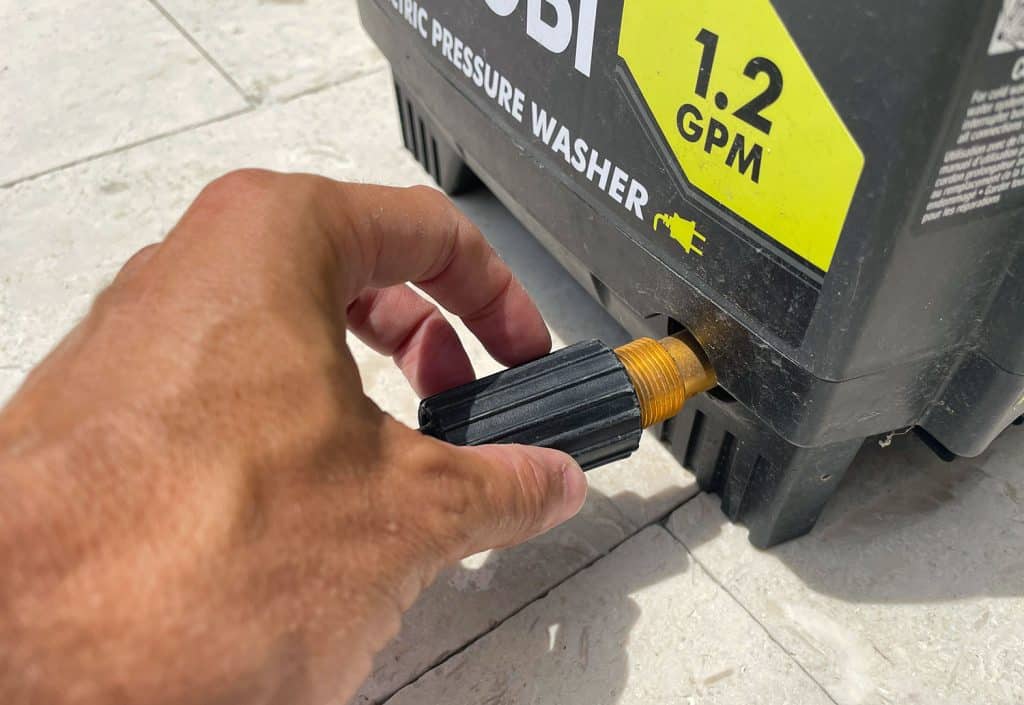
The high-pressure hose is what carries the pressurized water from the machine to the spray wand. Each end has an identical black threaded collar. One end connects to your trigger handle, the other to the brass connection on the pressure washer. Just hand tighten until they’re both secure.
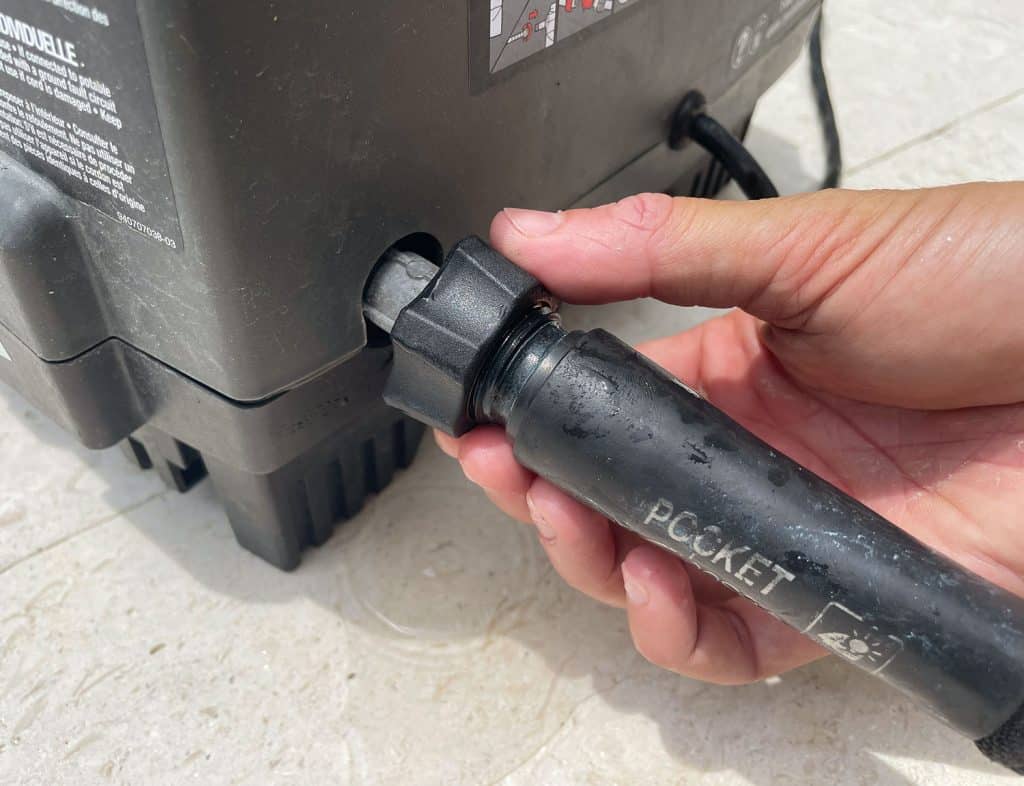
Step 3: Connect the Garden Hose
On the opposite side of the pressure washer, there’s a black threaded connection that fits a regular garden hose. Attach your hose tightly just like you would screw it onto your home’s hose bib.
Step 4: Select & Attach Your Nozzle
This pressure washer comes with 3 nozzle options that offer different levels of pressure for different applications (you can also purchase others as needed). There’s a handy guide on the top of the device that explains the differences between the three, along with holes to store them in.
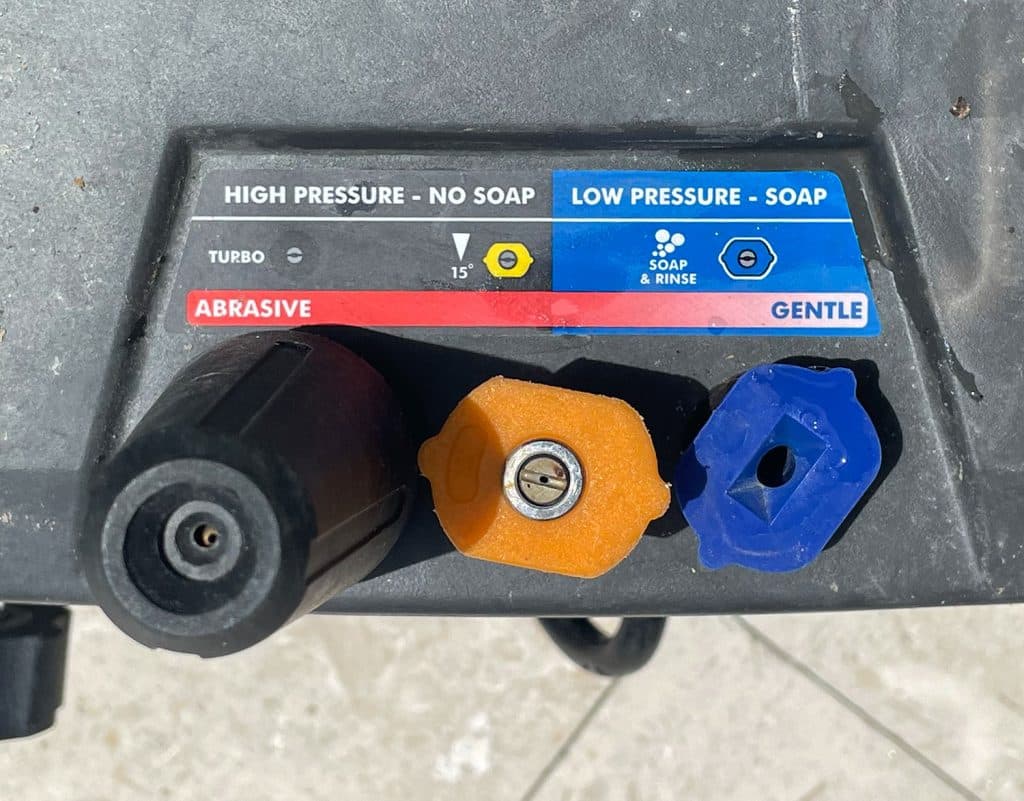
As we describe in the video, we almost EXCLUSIVELY use the middle (medium pressure) orange nozzle. It’s kind of the Goldilocks of options, giving us the “just right” amount of pressure for cleaning patios, decking, outdoor fabrics, and more. Plus, you can always adjust the pressure you’re applying by simply holding your wand closer or farther from the surface you’re cleaning. Just be careful because getting too close can damage some surfaces, even with a low pressure nozzle.
To attach your selected nozzle at the end of the wand, you just pull down on the brass collar and place the nozzle into the opening. Releasing the collar locks it into place.
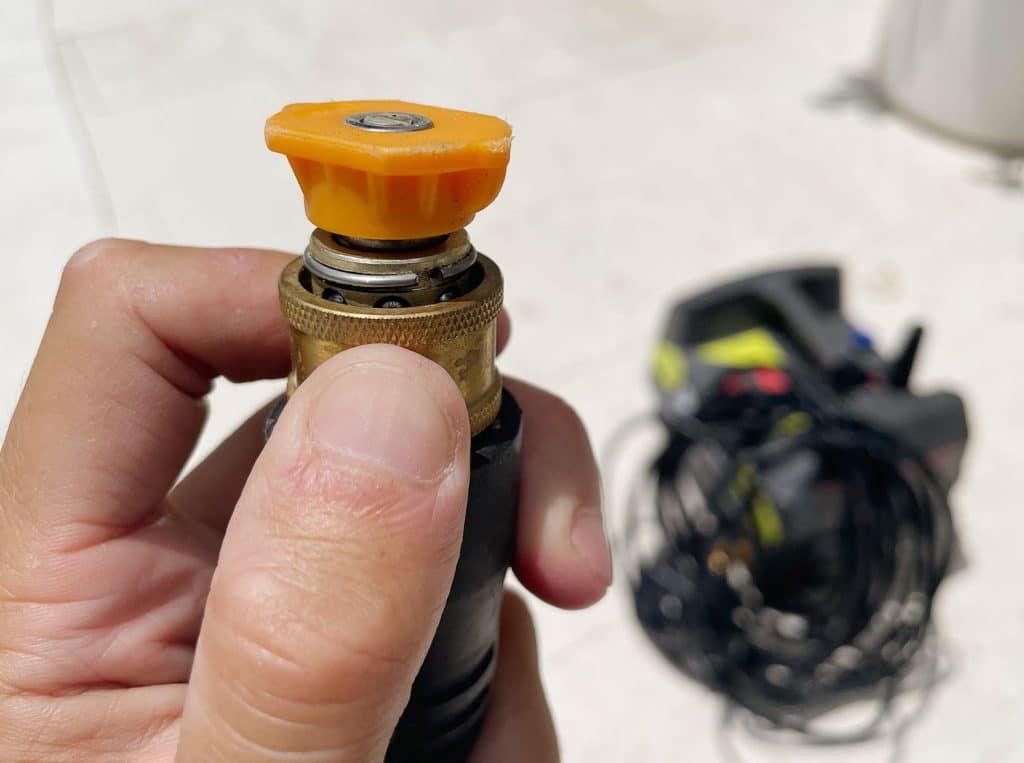
This completes all of the water connections you need to make, which means you can now…
Step 4: Turn On The Hose
With your water connections secure, you can now turn on the water at your hose bib. It’s a good idea to open that sucker ALLLLLLLL the way to be sure you’re getting the fullest flow possible from the hose.
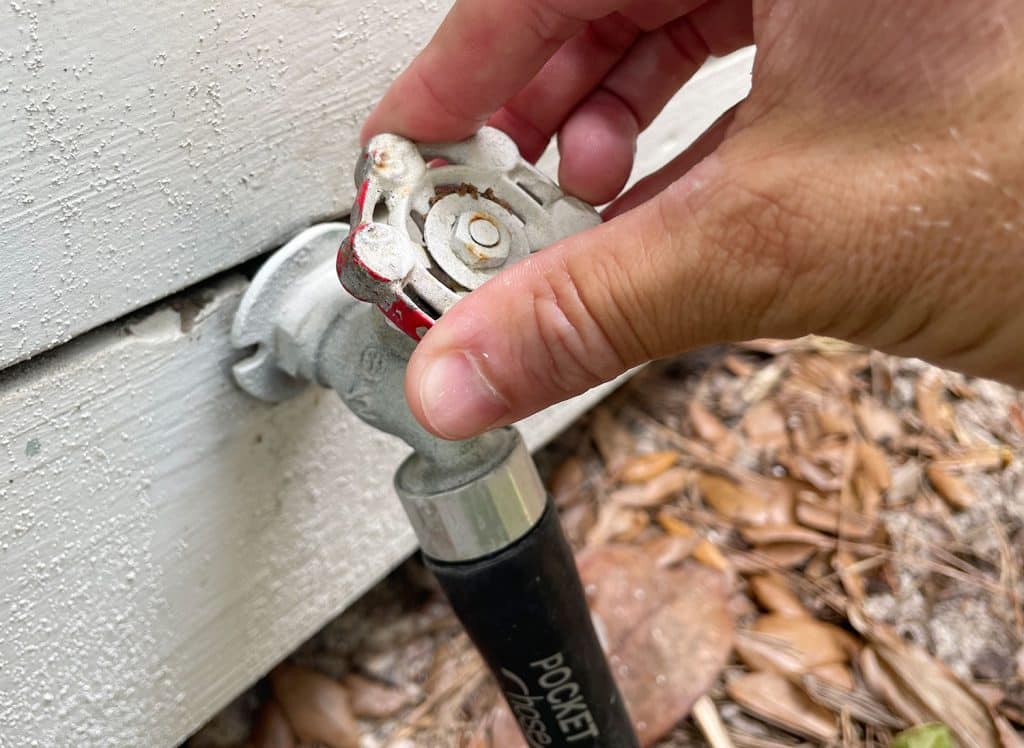
You also want to check your hose for any kinks, leaks, or other knots that might prevent the water from flowing freely to your pressure washer. It’s also a good idea to squeeze the trigger on your pressure washer for several seconds to be sure the water is flowing steadily before powering it up.
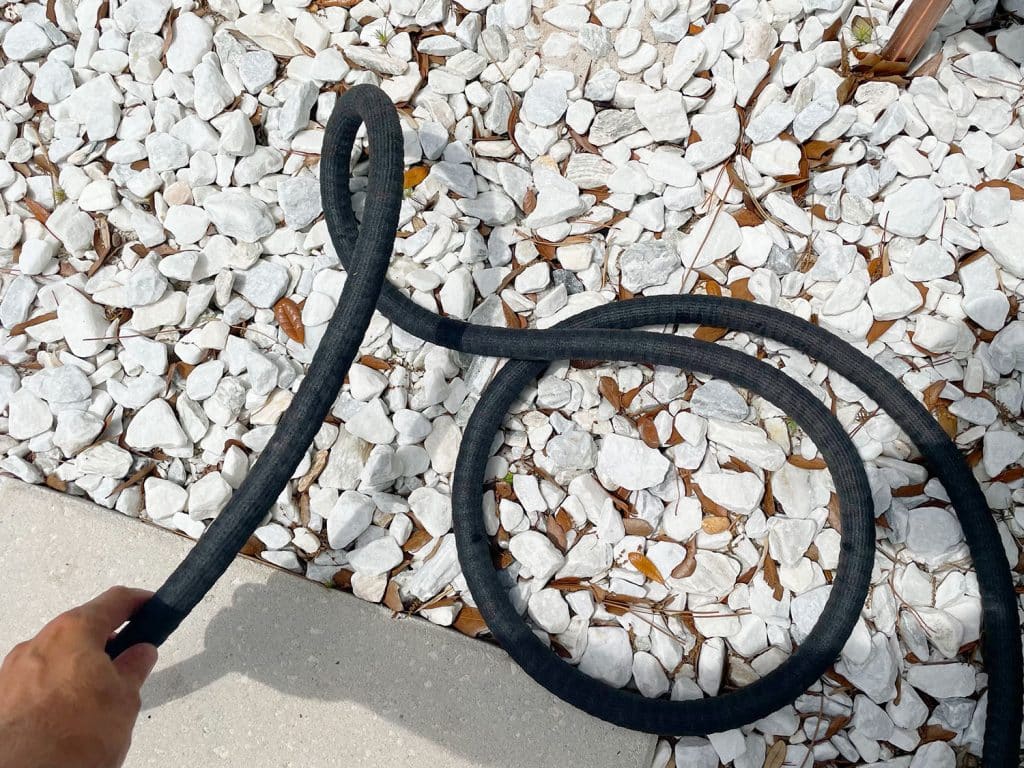
You may notice that we’re using one of those expandable “pocket hoses” that shrink up when it’s not full of water. We love these hoses because they’re less bulky and cumbersome than traditional hoses. Some sources discourage using these with certain pressure washers, but we’ve personally never had any issue with ours.
Step 5: Plug in to power
With your water good to go, now you can plug in your pressure washer. Ours comes with a SUPER long cord, so you probably won’t need an extension cord, but you can always use one if necessary.
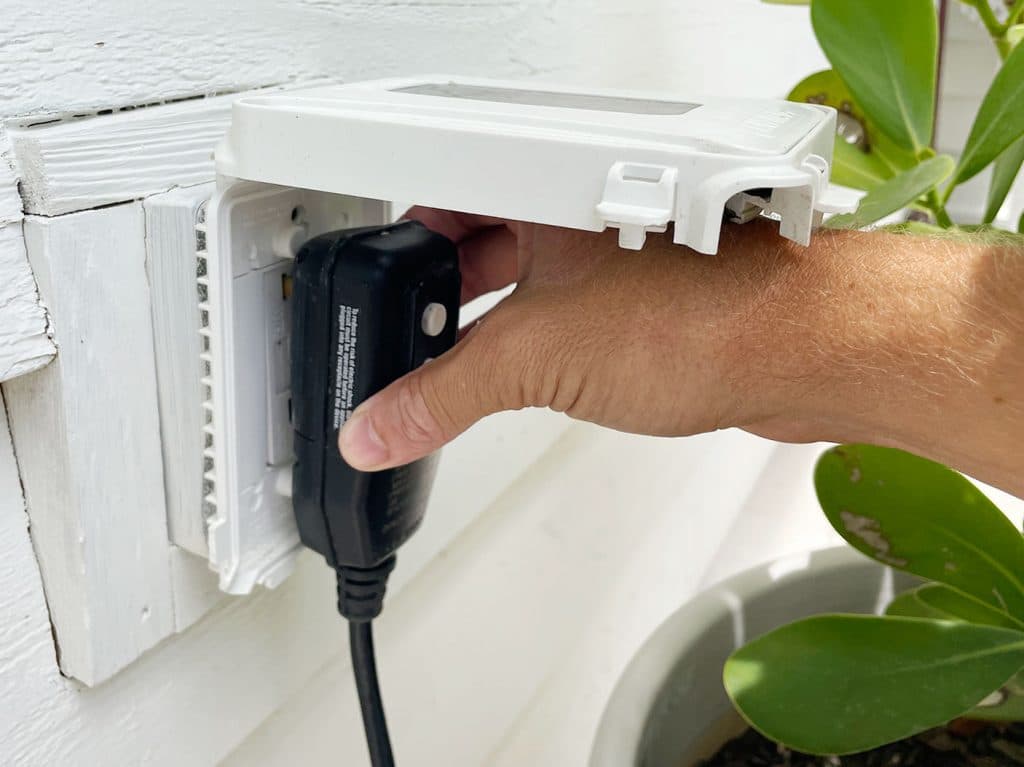
If you are connecting an extension cord, just be sure to elevate the connection point of the two plugs (like on a table, chair, or bucket) to prevent water from dripping toward the plugs.
Step 6: Turn On the Pressure Washer
Turn on the pressure washer using the black button on the top of the machine. You will immediately hear the device engage and you may see your high-pressure hose stiffen as pressurized water fills it up. If this does not happen, try pressing the test & reset buttons on the plug or on your GFI outlet. Those can be common culprits for your power not working.
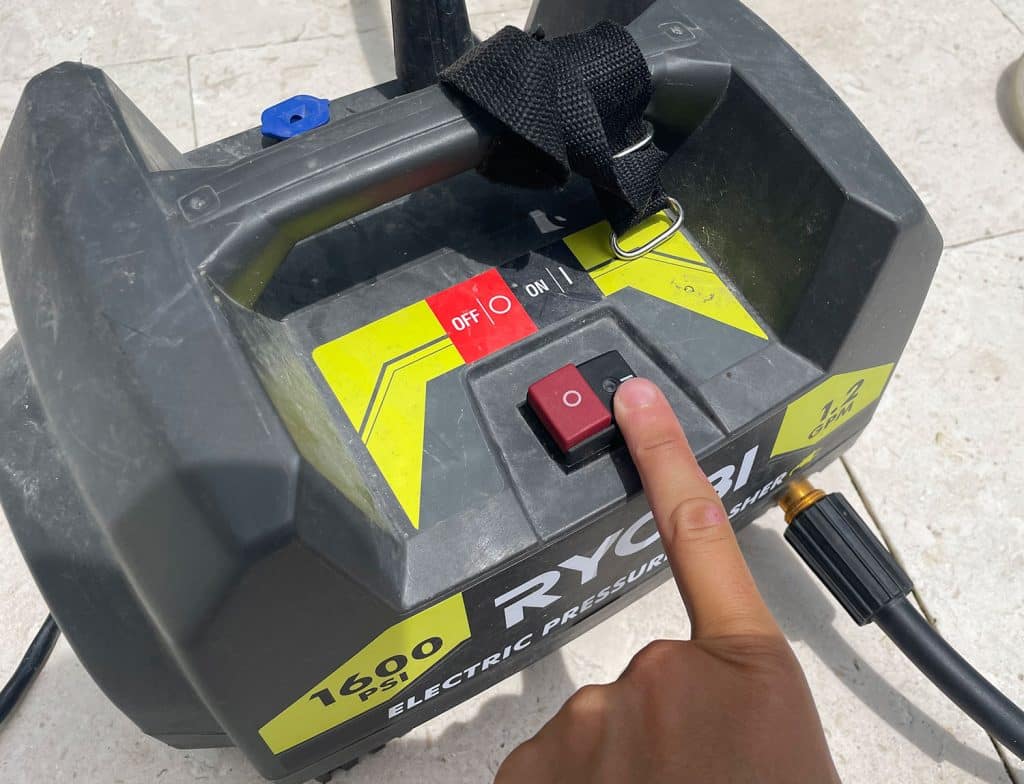
Now your pressure washer is set up and ready for use!
Before Cleaning With A Pressure Washer
We cover a lot of tips along the way during the video (watching that is truly the best way to get a full primer on pressure washing), but here are a handful of things to keep in mind before you start your first pressure washing adventure.
- Wear close-toed shoes and pants to help protect your feet and lower legs from any accidental pressurized spray. A direct, close-range spray can sting or even break the skin.
- Clean top to bottom. If your to-do list includes multiple surfaces, start with the higher ones (railings, patio umbrellas, etc) and work down to lower ones (decks, patios).
- Start slow and test in an inconspicuous spot first. It’s always good to start in a hidden spot (like the back of a pillow or the area of your deck that’s under your outdoor sofa). If it’s your first time pressure washing a particular material or surface, start with low pressure and gradually increase it as needed (by bringing your wand closer or changing nozzles) to make sure you’re not damaging the surface. Don’t start by blasting something with the nozzle mere inches away ever.
- Beware of sensitive materials like windows, soft woods, & vinyl siding that can be easily broken or damaged with too much pressure. We generally tend to stick to cleaning concrete, outdoor stone or tile, Trex or wood decking, brick paths or patios, wood or metal railings, and outdoor furniture/pillows as well as outdoor AND indoor rugs (more on that here). You obviously want the nozzle further away from fabric than, say, concrete.
- Mind your cords. This pressure washer is super light and portable, but keep an eye on your power cord and water hoses as you move it to make sure you’re not kinking anything or creating tripping hazards.
When To Pressure Wash Your Home
When you pressure wash will depend on your needs, environment, and weather. We typically break out our pressure washer 2-3 times a year – 1 big cleaning in Spring, 1 touch-up cleaning in Fall, and maybe another if we need to freshen up an outdoor area before hosting guests. Between our many trees, sandy roads, and the salty beach air, things can get grimy!
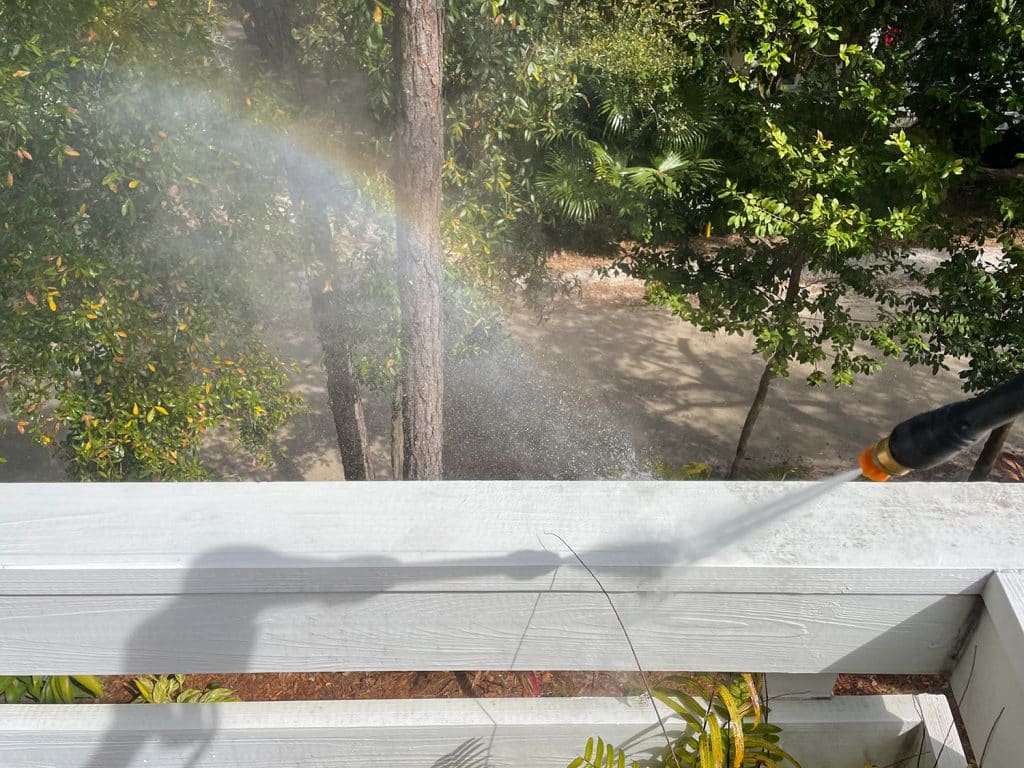
Spring is typically our most thorough cleaning because of all the dirt, pollen, and mildew that builds up over the winter. We suggest waiting until after your area’s spring pollen season to do this, if you can. That usually means the weather is warmer too, making it a more pleasant task too (you will get a little wet!)
Whatever season you are working in, remember that some materials may need time to dry – especially fabrics and cushions. So maybe don’t try to squeeze in a last-minute pressure washing before that backyard barbecue you’re hosting that night.
What We Clean With Our Pressure Washer
We use our pressure washer on virtually every man-made, outdoor surface in our yard. Here are the primary ones that we’ll cover today:
- Composite Decking
- Painted Railings
- Siding
- Outdoor Fabrics
- Stone Patios
Composite Decking
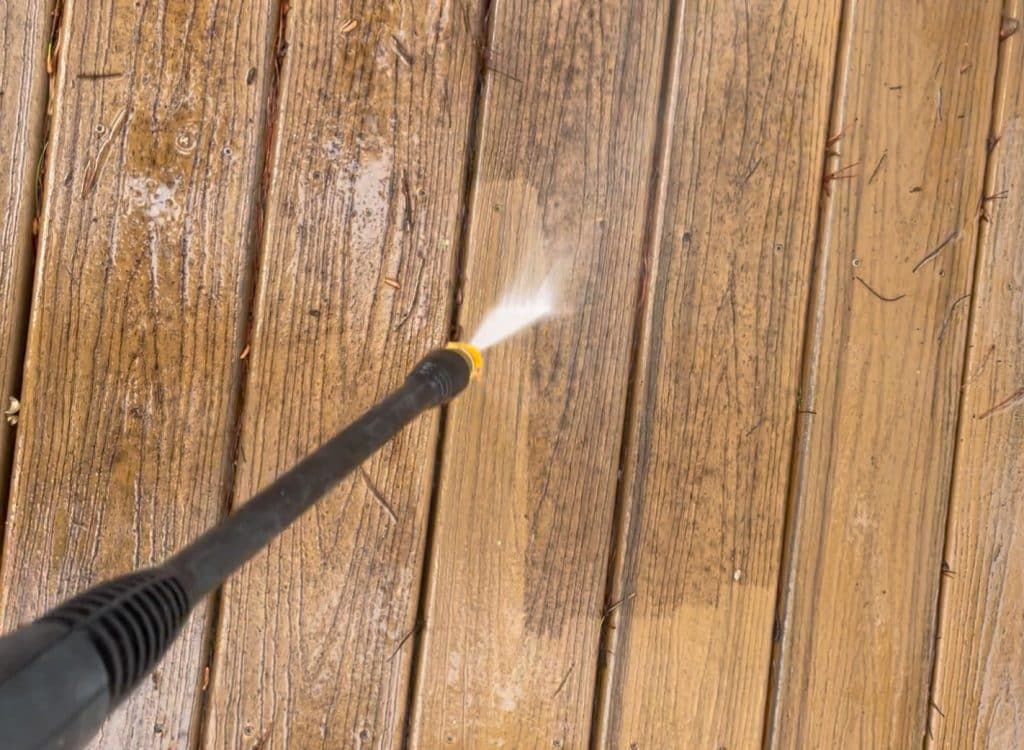
We have Trex decking on our porches and we’ve found the pressure washer to be a great way to get dirt, dust, and sand build-up off of them. The woodgrain texture on the Trex catches a lot of grime and we hadn’t cleaned our upstairs deck in a while, so it had quite the layer of black tree dirt. That made the job super satisfying though…
Doing that large upstairs deck was pretty tedious because we had to be slow & systematic so we didn’t miss any boards (sometimes it’s hard to see what’s still dirty once everything has gotten wet). So before doing my downstairs decks I bought this $50 surface cleaning attachment for electric pressure washers that a bunch of you have recommended for doing larger “floor” surfaces faster. Boy was it a game-changer!
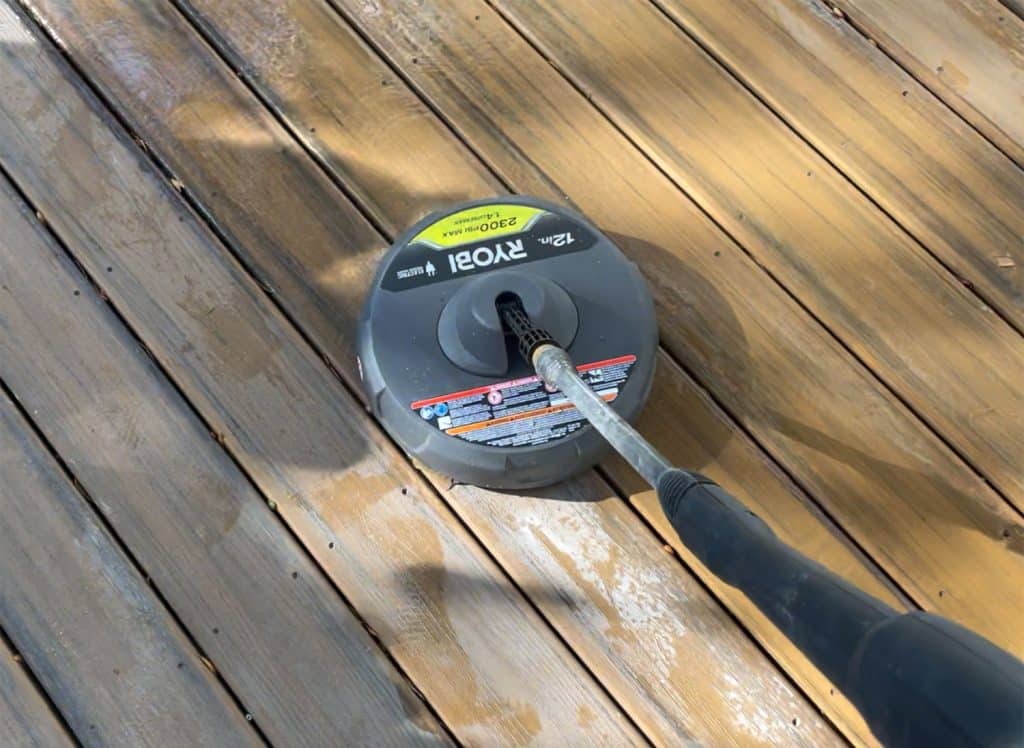
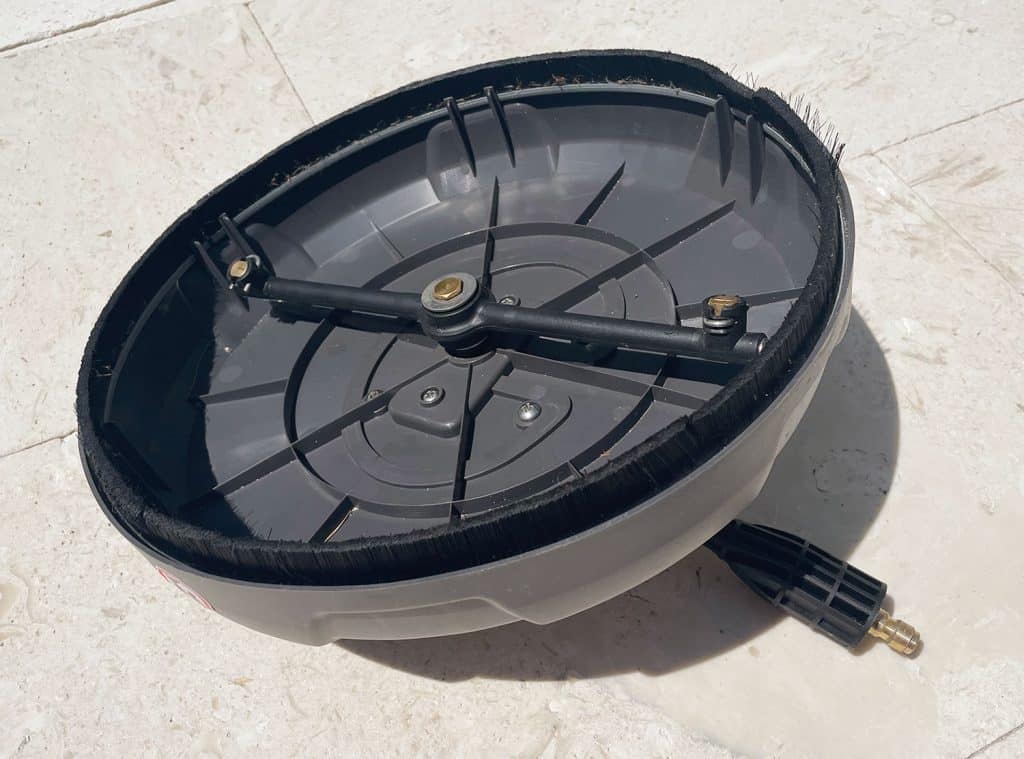
It attaches to my spray wand just like any other nozzle does, but provides a much larger 12″ cleaning surface, which made pressure washing my decks SO. MUCH. FASTER.
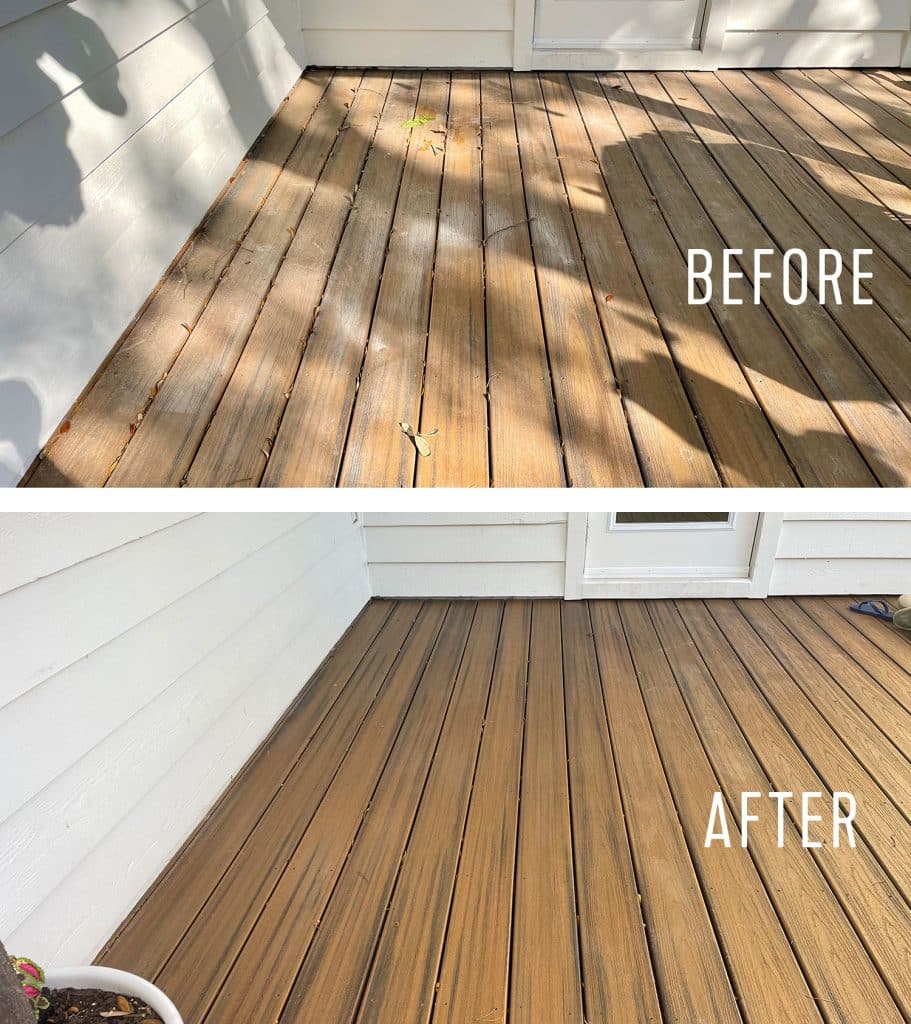
Not only was it faster, but I didn’t worry as much about leaving “streaks” if I missed a spot or only cleaned part of a particular board. You can see below that our decks can get a lot of sandy footprints and settled sand on them. But they look much fresher now!
Painted Railings
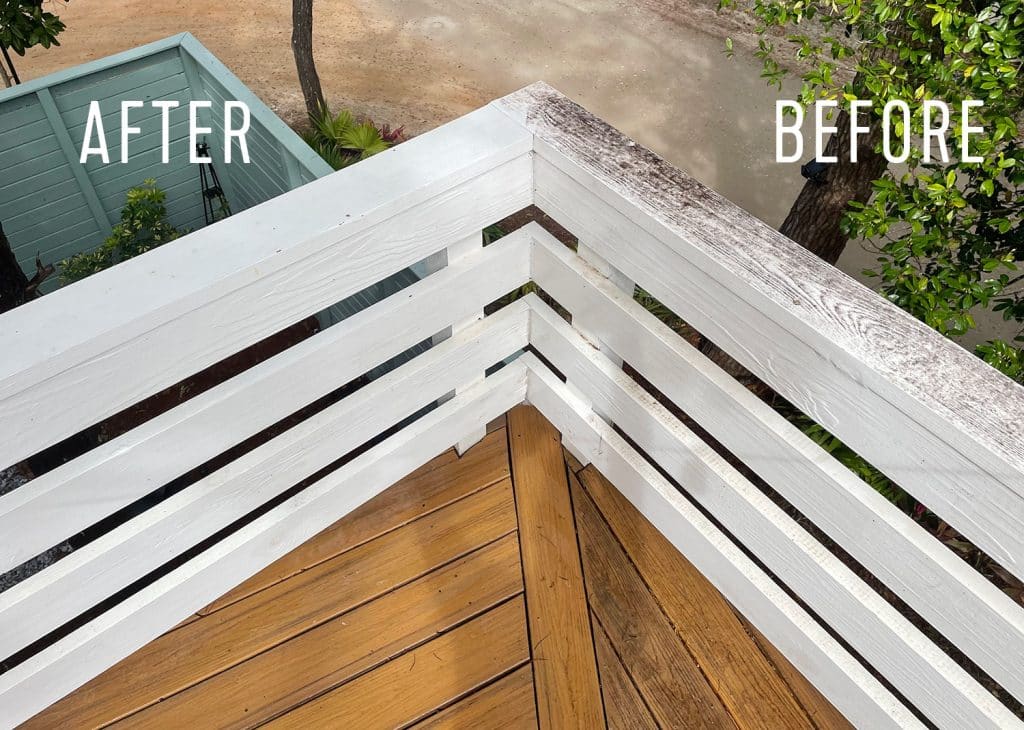
Another area that we hadn’t cleaned in a while was the upstairs deck railings, which had a build-up of tree dirt on them just like the Trex decking.
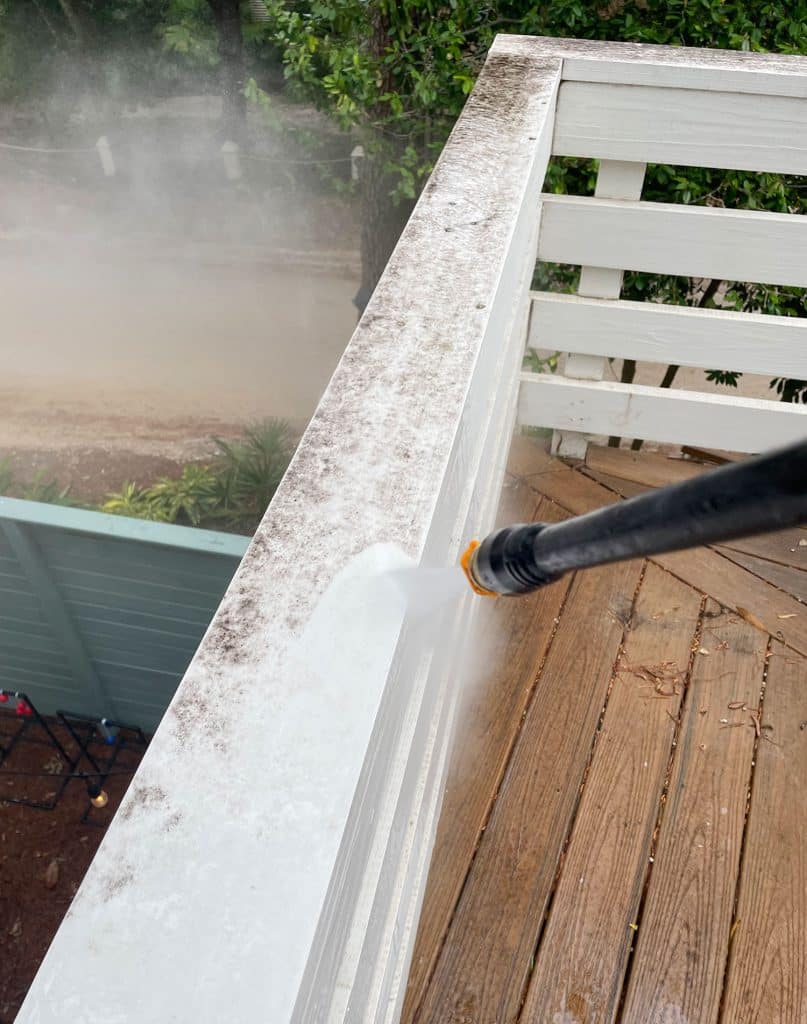
These railings are painted wood, and you should always use a bit of caution when pressure washing painted surfaces because the pressure can cause the paint to chip or flake. Also, if any areas have started to rot beneath the paint, the pressure washer can make the situation worse.
We just always keep a close eye on the surface as we clean, and lessen the pressure (step back!) or skip a particular spot if the paint isn’t holding up. If your biggest nightmare is some flaked paint, I’m also here to assure you that a few paint touch-ups aren’t a big deal. We’ve done them and they’re never detectible once it’s dry.
Siding
We use our pressure washer to rinse dust and dirt from our siding. We currently have cedar siding, but have pressure washed vinyl and composite siding too. Just be careful not to apply too much pressure if your siding is painted or in poor repair. You also want to avoid spraying upward under the seams, so you may need a ladder or a telescoping extension pole to spray higher areas from straight on.
Outdoor Fabrics
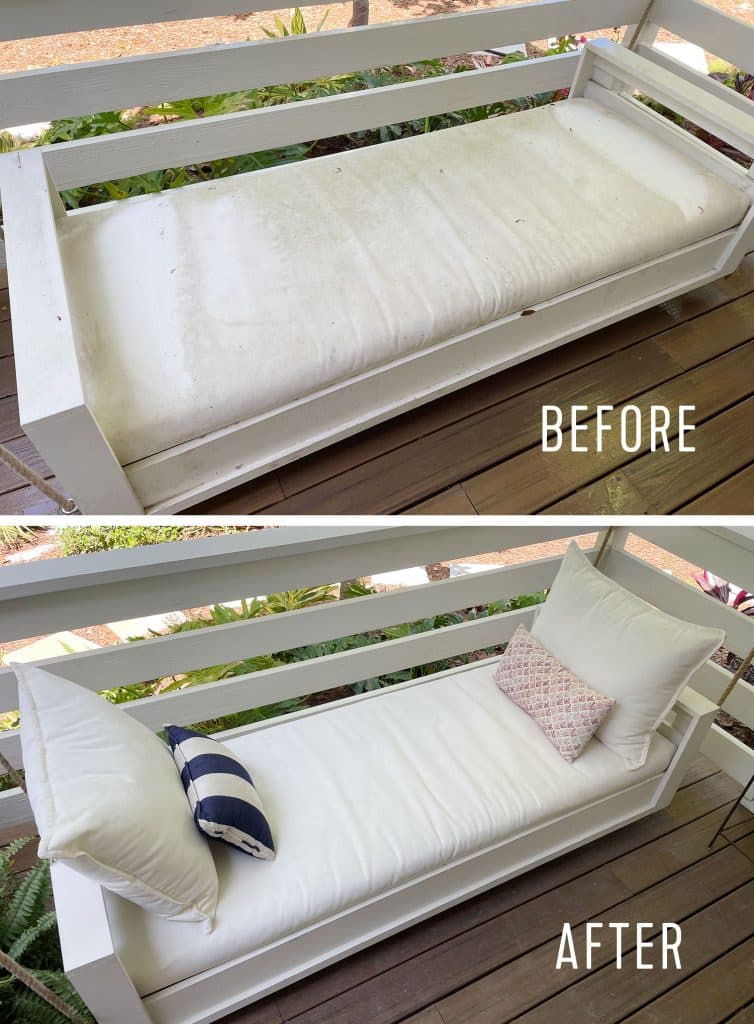
We’ve definitely extended the life of more than a few outdoor pillows and cushions thanks to our pressure washer. It’s just especially important with fabrics to take it slow because too much pressure can cause the fabric to tear or fray. So start on the back and with low pressure, especially if it’s the first time you’re cleaning that material.
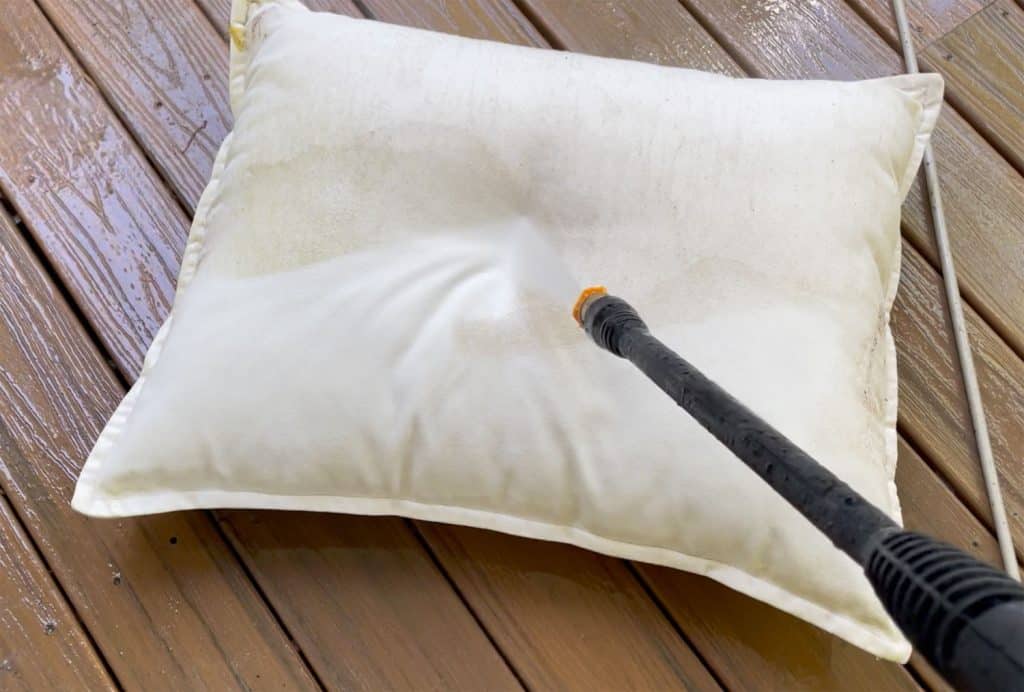
Also, keep in mind that the process may not be perfect. Some stains may only get lighter, not disappear entirely. So you may need to attack certain spots with an outdoor cleaner or fabric cleaner to finish the job. But for us, we find the pressure washer does the bulk of the work getting our outdoor fabrics ready for spring. Hot tip: put them in the sun to dry. That does a great job of lightly bleaching some more stubborn stains than if you set them out to dry in the shade.
Stone Patio
Pressure washing is a great way to get patios, driveways, sidewalks, and even some decking to look new again. This was the first season we used it to clean the stone patio around our pool, which had collected a lot of green scum in some of the more shaded areas of the yard (under and behind the lounge chairs for example).
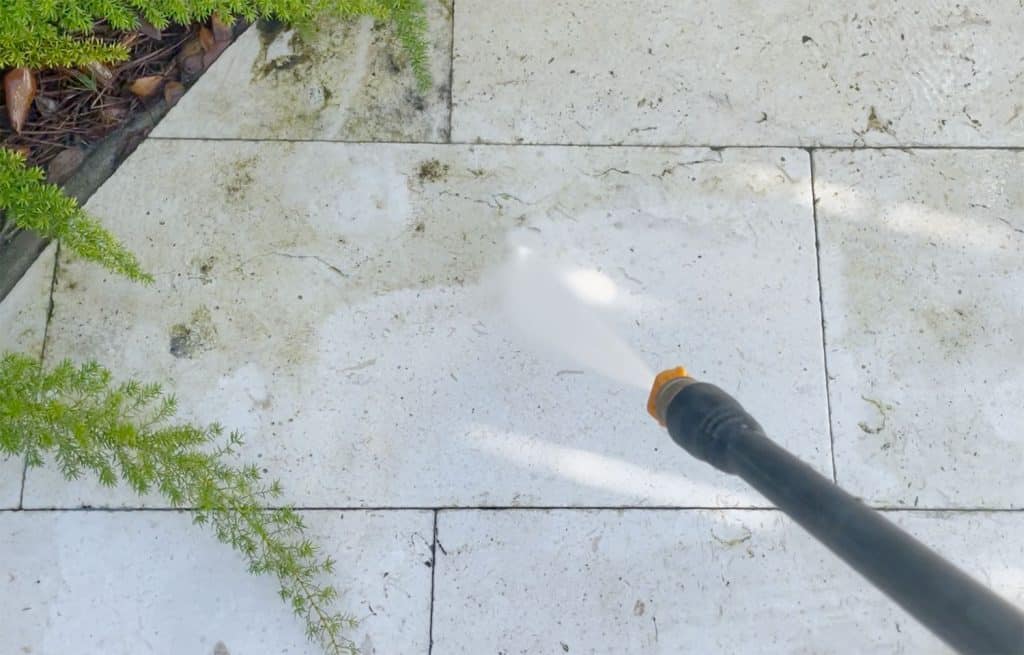
The video shows how satisfying this really was, but the before & afters below give you an idea as well. It’s a bit hard to tell because the stone itself has some darker shell “spots” in it (and the surface is wet in the after shot), but this whole area looks totally redeemed.
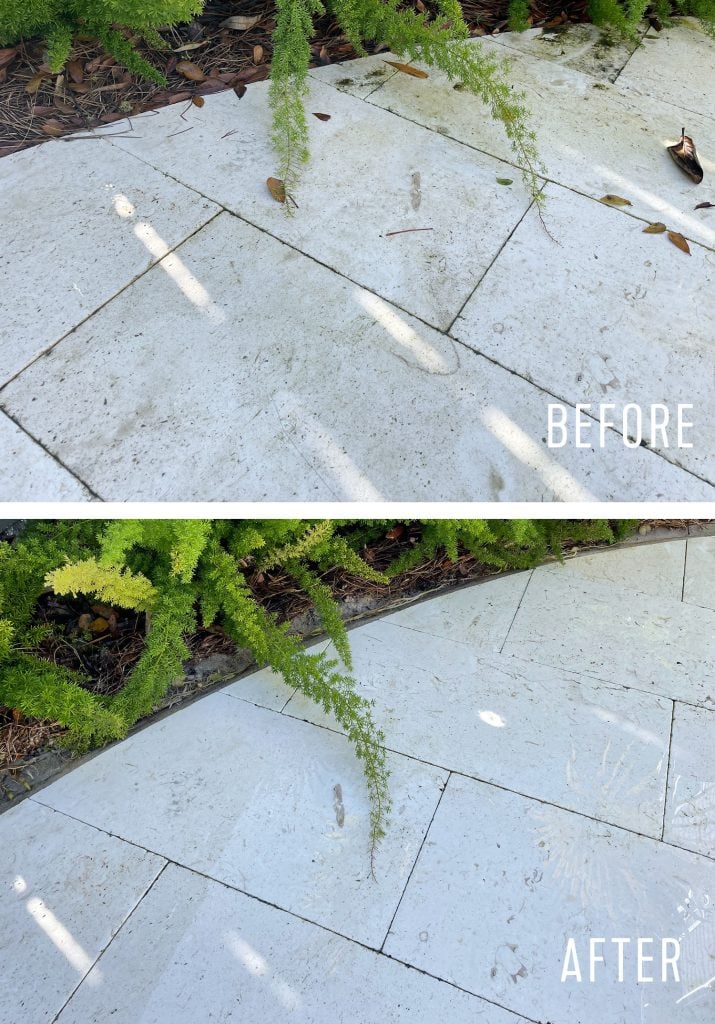
*Everything except the left corner of the patio was cleaned in the photo above – see that line of darker scum? Such a difference.
When you’re cleaning patios or other stone surfaces, just be mindful of any polymeric sand (or regular sand) that you may have between the cracks. The pressure washer may blow that loose and you’ll need to refill it.
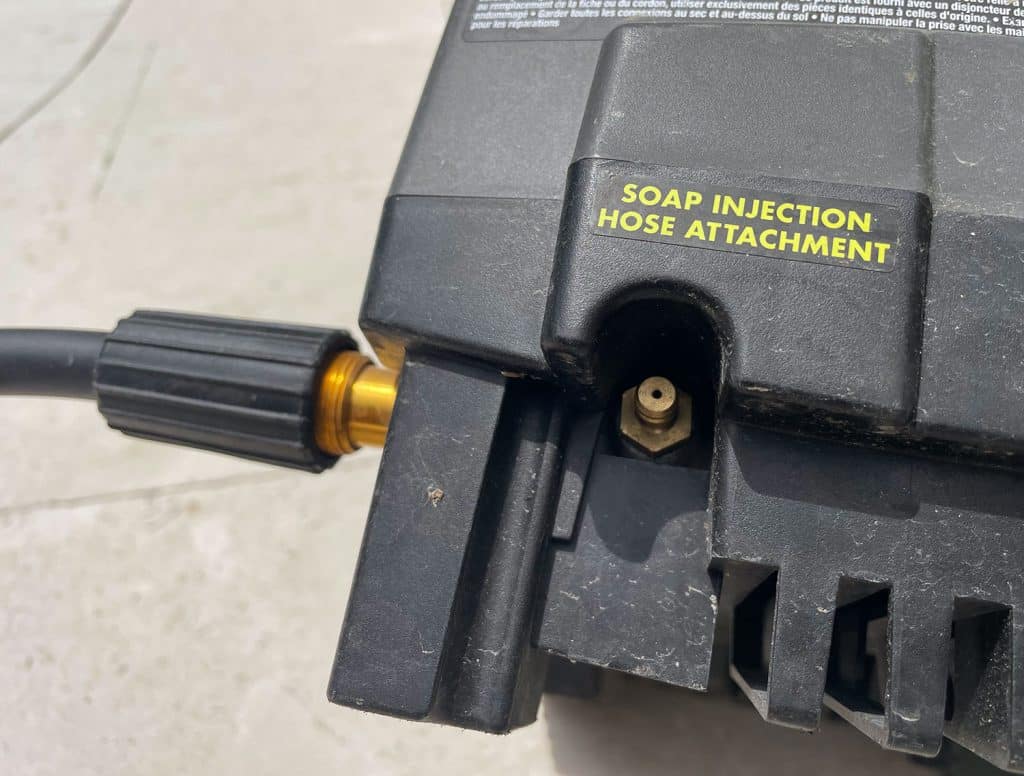
We also get asked very often about whether or not we add some sort of soap or cleaner to our pressure washer. While the machine DOES come with a way to wash with soap (it includes a hose that you can attach and connect to your bottle of soap), honestly, we’ve never used it. We just spray outdoor cleaners on certain items (mainly stubborn fabric stains – for example, we use this fabric cleaner) by hand and then pressure wash them to move those suds all around and rinse them away.
The last thing to keep in mind when cleaning outdoor fabrics is to make sure you have a sunny spot to let them FULLY dry. Otherwise, you may just encourage more mildew build-up.
Other Uses For Your Pressure Washer
While those are the ways that we currently use our pressure washer, there a TONS of other ways they can be useful around the house. Here are some previous posts we’ve written about other pressure washing adventures:
- Cleaning unpainted wood and brick
- Refreshing an indoor rug
- Revitalizing our wood outdoor shower
- Cleaning outdoor tile, furniture, and cushions
Putting Your Pressure Washer Away
Once you’ve finished your cleaning, disconnecting and storing your pressure washer is even easier than setting it up. You’re basically reversing the steps:
- Turn it off and unplug it
- Turn off your water
- Spray the wand for several seconds to release the water pressure (it will make disconnecting the hoses easier)
- Disconnect your garden hose
- Disconnect your high-pressure hose from the pressure washer (we leave it attached to our spray wand, but you can disconnect that end too)
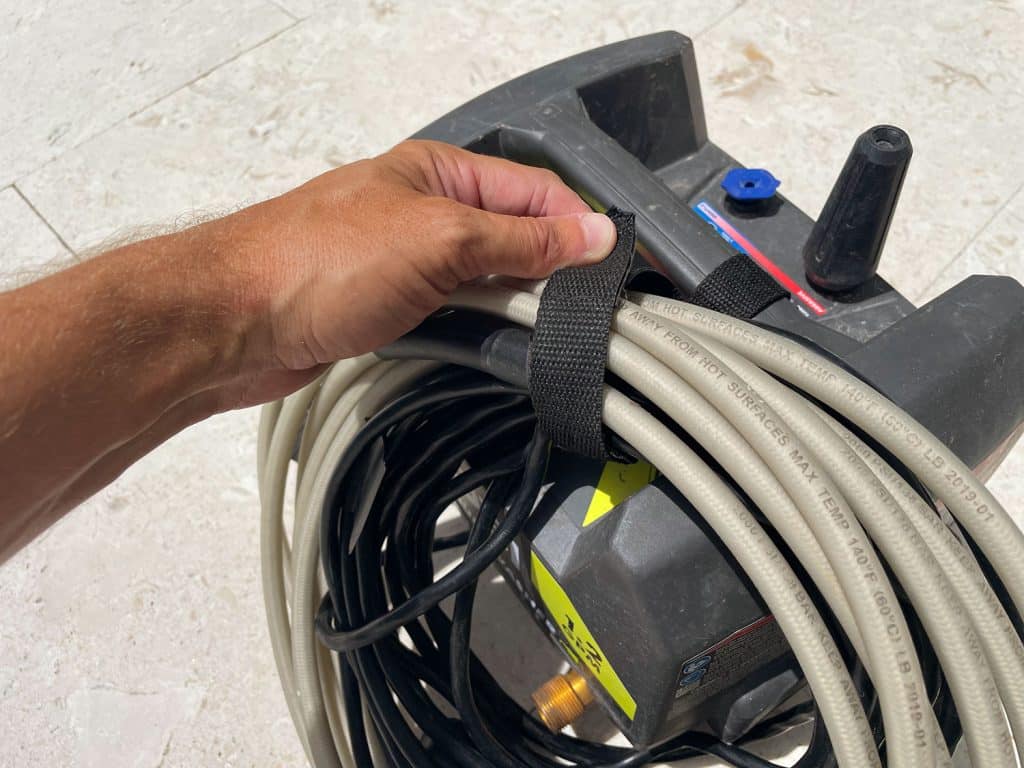
Once everything is disconnected, there’s a handy velcro strap on the handle of the machine to help you wrangle all of your cords and hoses. It’s one of our favorite features because it makes storing it so much easier! You can see it in action in the video 😉
So, there you have it. All the info I can possibly think of on the topic of pressure washing. I hope it leaves you feeling confident that you can tackle this project yourself (you can!). I’m ridiculously glad that we tried one out many years ago and have never regretted owning one since!
More House Cleaning Advice
If you’re interested in more ways to keep your home clean, check out these posts below:
- Our Go-To Household Cleaners
- 2-Ingredient Homemade Window Cleaner
- How To Clean A Stainless Steel Sink
- Are Robot Vacuums Worth It?
- How To Get Rid Of Fruit Flies
- The Best Home Air Purifier
*This post contains affiliate links, so we may earn a small commission when you make a purchase through links on our site at no additional cost to you.