Installing a toilet was one of the very first DIY projects we did as first-time homeowners in 2006. Now, nearly 2 decades later, we’ve done it so many times I’ve lost count. In fact, you’ll see photos from several different bathrooms in this post. Installing a toilet may feel complicated, intimidating, and… well, gross. But it is a remarkably straightforward project that anyone can do. You don’t even need to be named John like me (get it?).
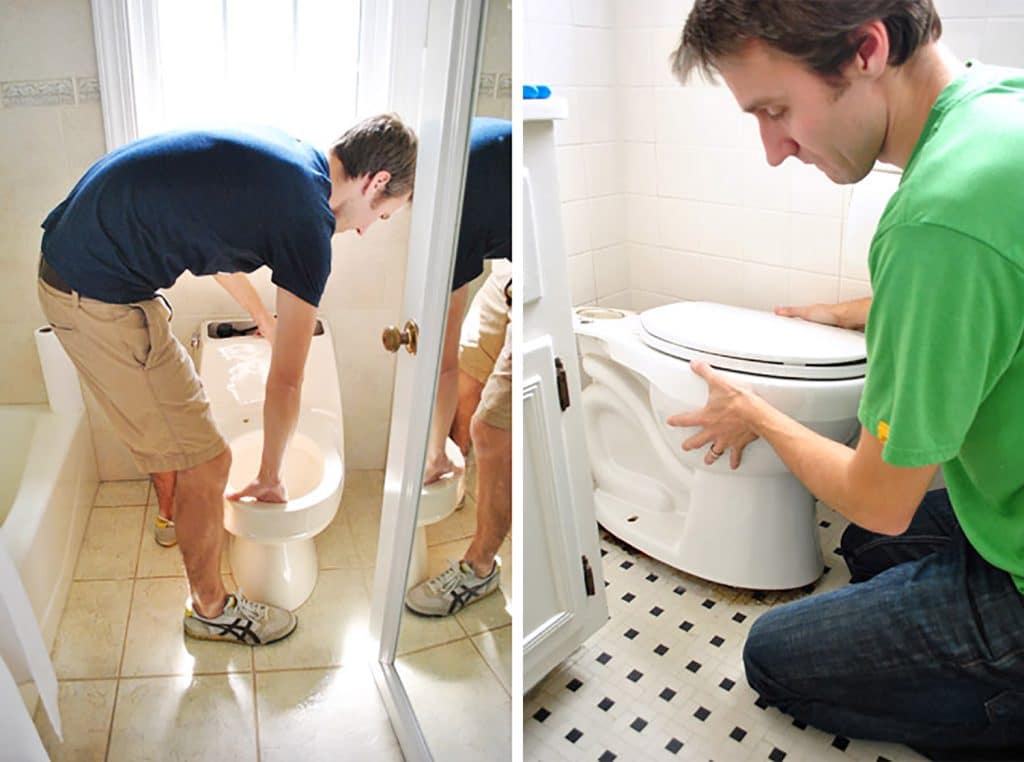
This process is not only useful for replacing a toilet but can also be used to fix a toilet that may be leaking or rocking. You can also use these steps to reinstall your existing toilet if it’s been removed as part of a bathroom remodel.
Tools & Supplies Needed
It doesn’t require many tools or special supplies to install a toilet, but here are some important items to have handy.
- New toilet* (this Kohler model is our favorite)
- Measuring tape
- Wax ring kit
- Adjustable wrenches or groove joint wrenches
- Flathead screwdriver
- Spare rag
- Spare towels or blankets
- Sponge, paper towels, and/or small bowl
- Utility knife
- Hacksaw
- White silicone caulk
- Level (optional)
- Gloves (optional)
*If you are reinstalling your existing toilet, a new model isn’t necessary. We will include steps below for reusing the same toilet.
Steps To Install A Toilet
We suggest reading this full tutorial before beginning your project and buying your supplies. Below is a quick overview of the steps.
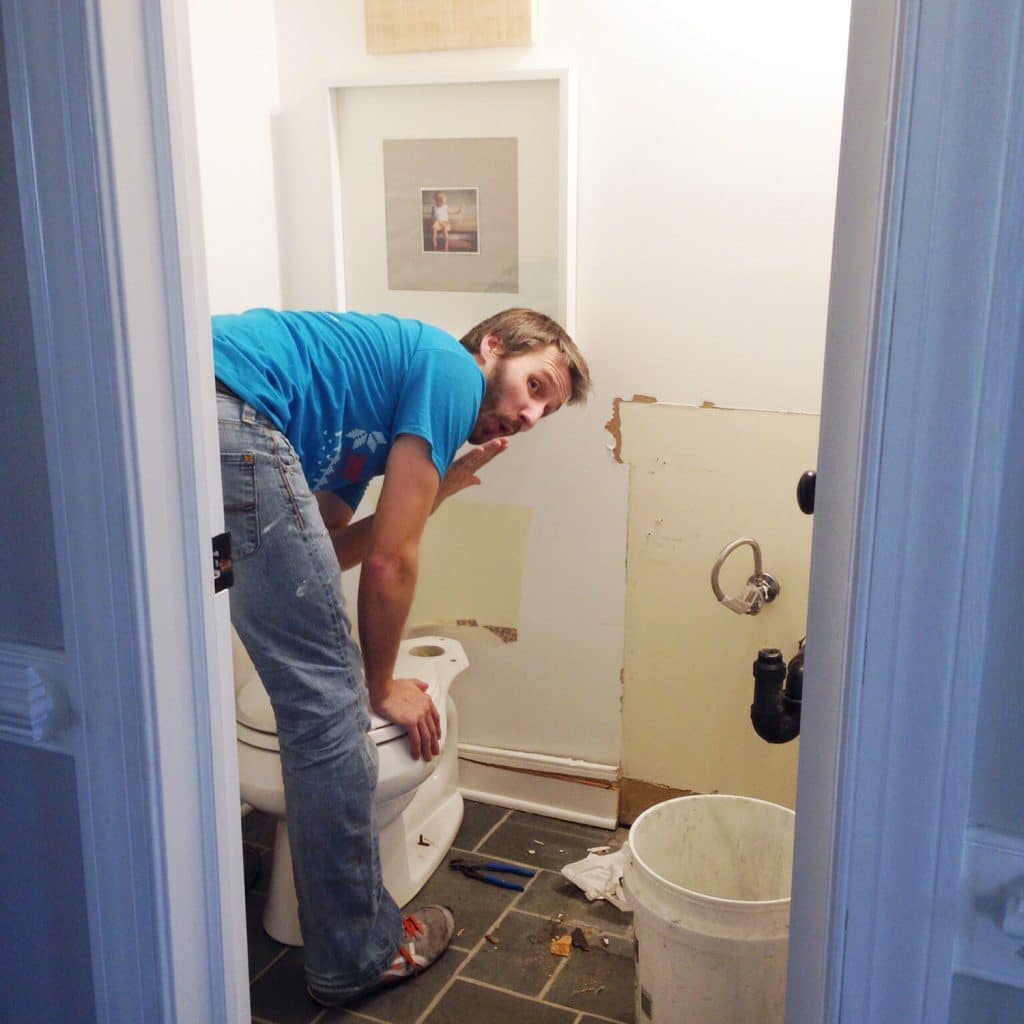
- Measure Your Rough-In*
- Purchase A New Toilet*
- Remove Your Old Toilet
- Prepare The Floor & Flange
- Add The Wax Ring
- Place The Toilet Bowl
- Bolt The Toilet Bowl
- Install The Toilet Tank
- Connect The Water Line
- Finish The Toilet Installation
*Again, some steps are optional if you are reusing your existing toilet.
Step 1: Measure Your Rough-In
Before purchasing a new toilet, you need to know your bathroom’s “rough-in” distance. This is the distance from the bolts on the floor to the back wall. Standard toilets are designed for 12″ rough-in, so use a tape measure to ensure you have at least this much space. Older or smaller bathrooms may have less, which may require a compact toilet designed for 10″ rough-ins.
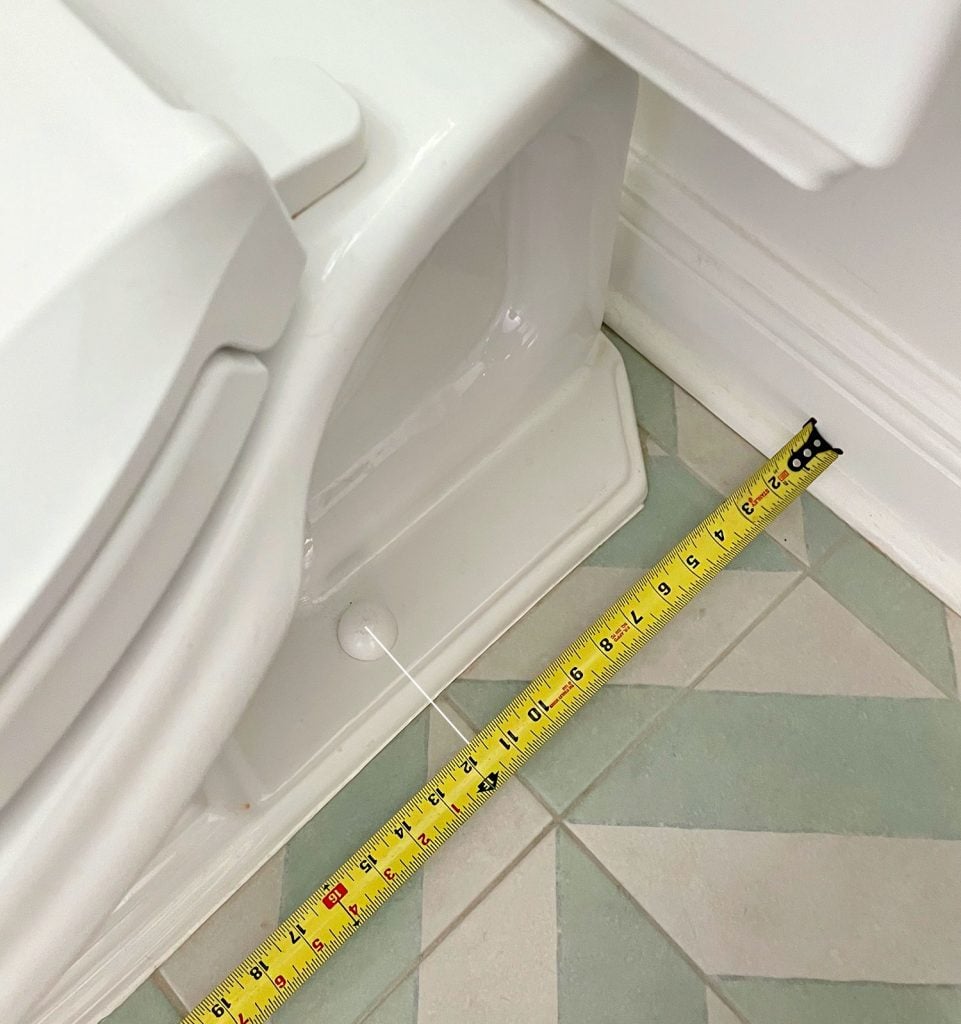
Remember to add the depth of your baseboard to your rough-in measurent. Most toilets (unless its skirted) come closest to the wall at the height of the tank, which is usually well above the baseboard. So don’t panic if the distance between bolts & baseboard is slightly less than 12″ like you see above.
Step 2: Purchase Your New Toilet
In addition to rough-in distance, there are a few other options to consider when selecting a new toilet. Here are some terms & options to be aware of.
- Round vs Elongated Bowl: The shape of an elongated bowl tends to be more comfortable to use, but some people prefer the more classic look of a round bowl. Round bowls also tend to be shallower, making them a good option for smaller bathrooms.
- Chair/Comfort vs Standard Height: Standard height toilets are typically about 14-15″ from floor to the bowl rim (not counting the toilet seat). Many find a higher toilet easier to use and these are sometimes labeled chair, comfort, or tall height and tend to be closer to 17″ high.
- One- vs Two-Piece: It’s easier to install a toilet built in two pieces (bowl + tank) because each piece is lighter and less cumbersome. However, some prefer the seamless look of one-piece toilets.
- Single- vs Dual-Flush: Dual-Flush toilets are considered more eco-friendly because they provide separate flush options for liquids vs solids, the former of which uses less water. You can also retrofit any toilet with a dual-flush kit.
There are smaller design choices (color, style, etc) or functional features (flush strength, lever location, etc) that may be important to you as well. As well as unique options like wall-mounted toilets, square bowl toilets, and even composting toilets. But if you’re looking for a nice, standard option, this Kohler Memoirs has long been our favorite toilet.
Step 3: Remove Your Old Toilet
Assuming you have an existing toilet in the way, you’ll first need to remove it. This is a great opportunity to familiarize yourself with the steps to install a toilet, just in reverse. It goes like this:
- Turn off & empty water
- Disconnect the water line
- Unscrew & remove the tank
- Unscrew & remove the bowl
- Plug flange with rag
Turn off & empty water
Start by turning off the water supply valve, usually located on the wall or floor behind your toilet tank. Turn it clockwise by hand until it stops. If it is hard to turn, try spraying it with a lubricant like WD-40. Avoid forcing it with a wrench, since this could break it and cause flooding.
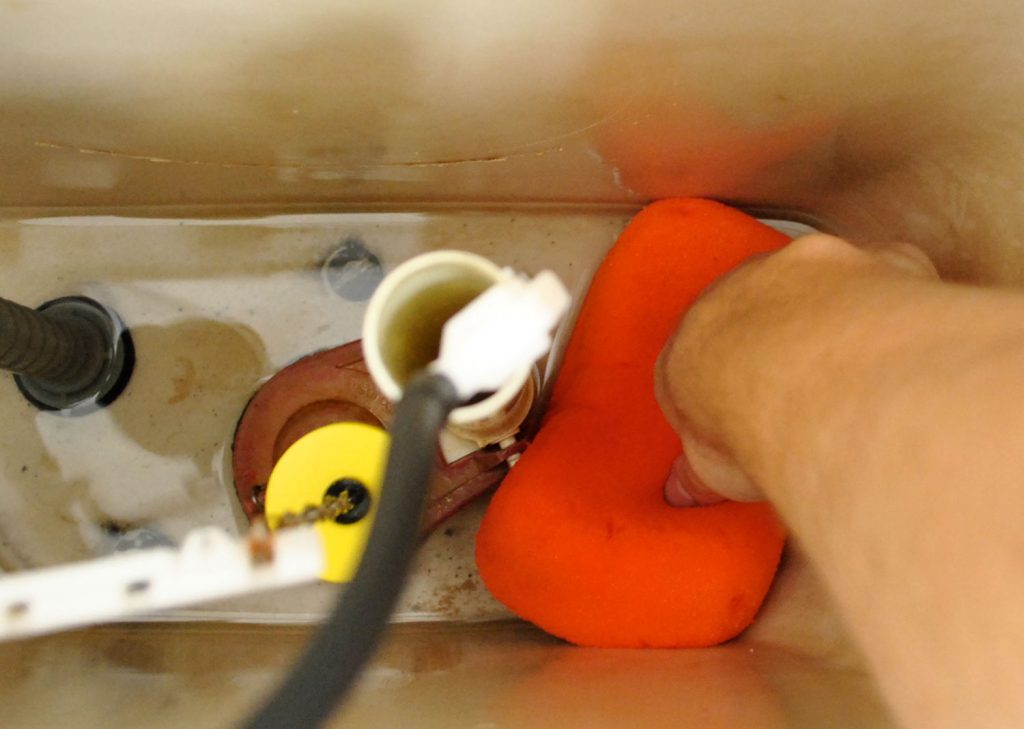
With the water turned off, flush your toilet to empty the tank and bowl as much as possible. Use a sponge, bowl, and/or small cup to remove any remaining water.
Disconnect the water line
Now disconnect the water supply line from the bottom of your toilet tank. Turn it counterclockwise by hand or with an adjustable wrench. Have a bowl or paper towels handy since some of the leftover water in the supply line is likely to spill out.
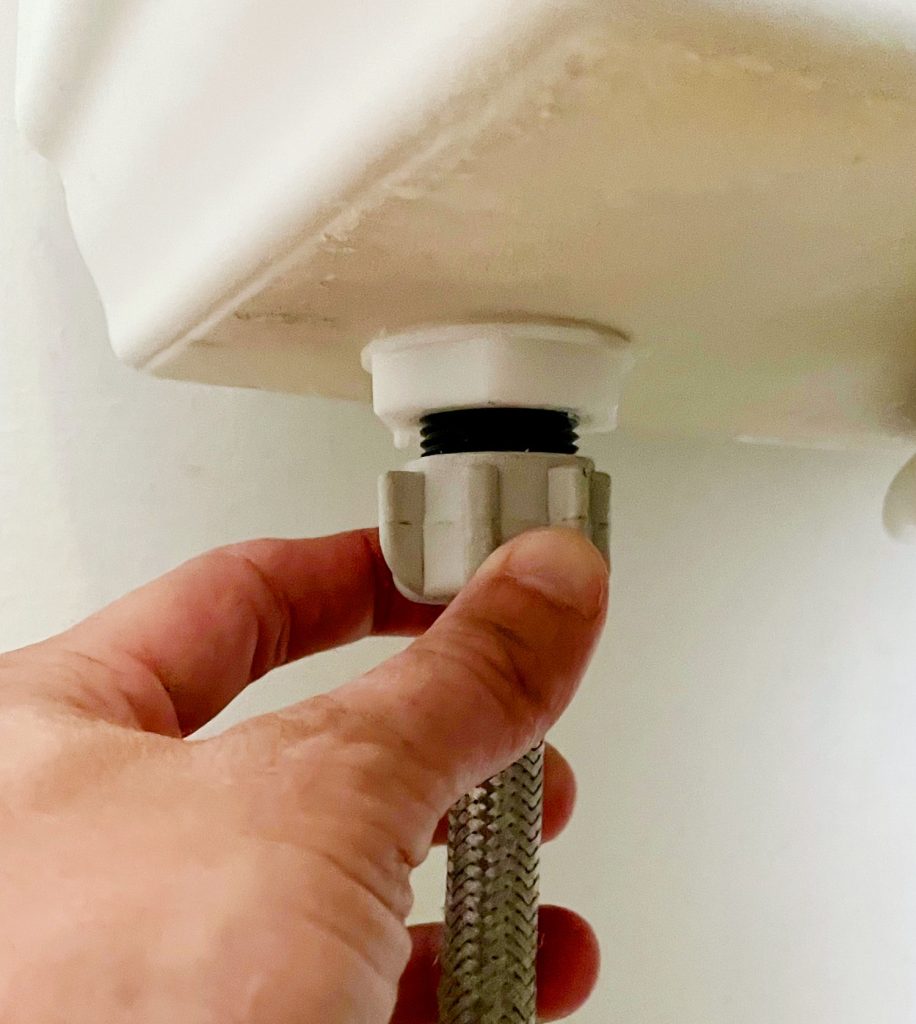
You can leave the supply line connected to the wall unless you plan to replace it too.
Unscrew & remove the tank
Assuming you have a two-piece toilet, the next step is to remove the tank from the bowl. This isn’t absolutely necessary, but I find it’s easier (and lighter) to work with the tank separated. The tank is held to the bowl by three tank bolts. Unscrew the nut on the underside of the tank with a wrench. You may need to use a flathead screwdriver inside the tank to keep the bolt from moving while you unscrew the nut.
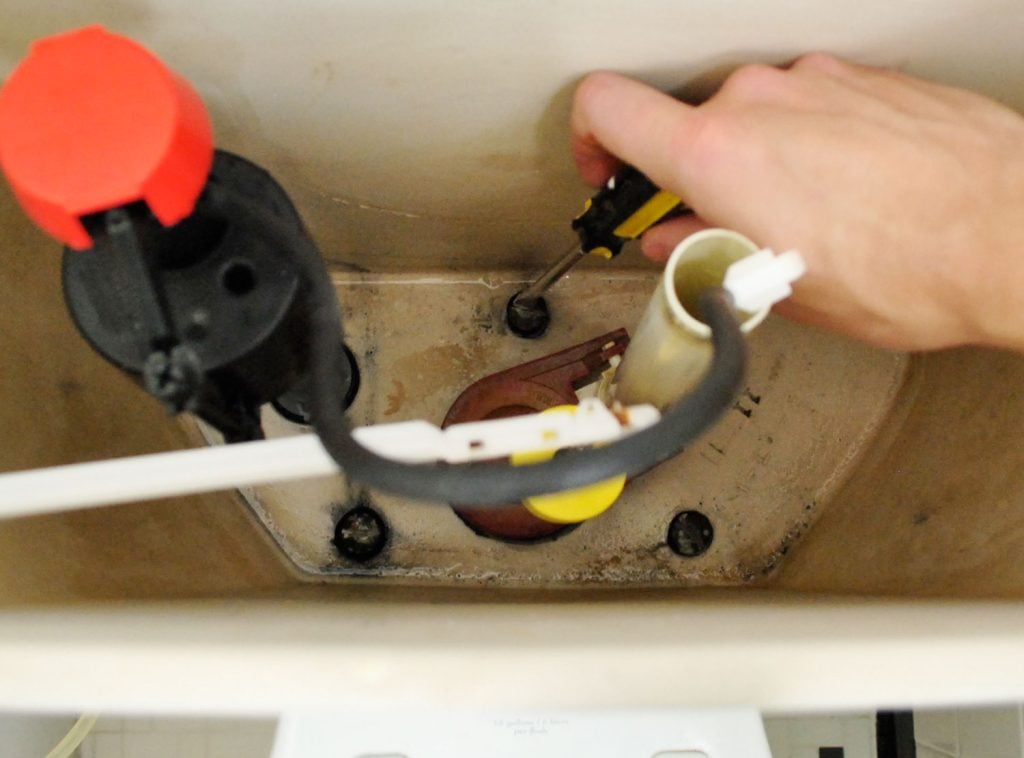
With both bolts removed, you can lift off the tank and set it aside. We like to put it down an old towel or soft blanket to prevent accidentally cracking it on the hard floor.
Unscrew & remove the bowl
The toilet bowl is held to the floor by two bolts on either side. These may be hidden underneath plastic bolt caps that match your toilet finish. Use your wrench or pliers to remove each nut (turning counterclockwise). If your toilet is caulked around the base, use a utility knife to score the caulk line. To remove the toilet bowl, we find it helpful to gradually rock it side to side a bit, which will loosen the wax ring.
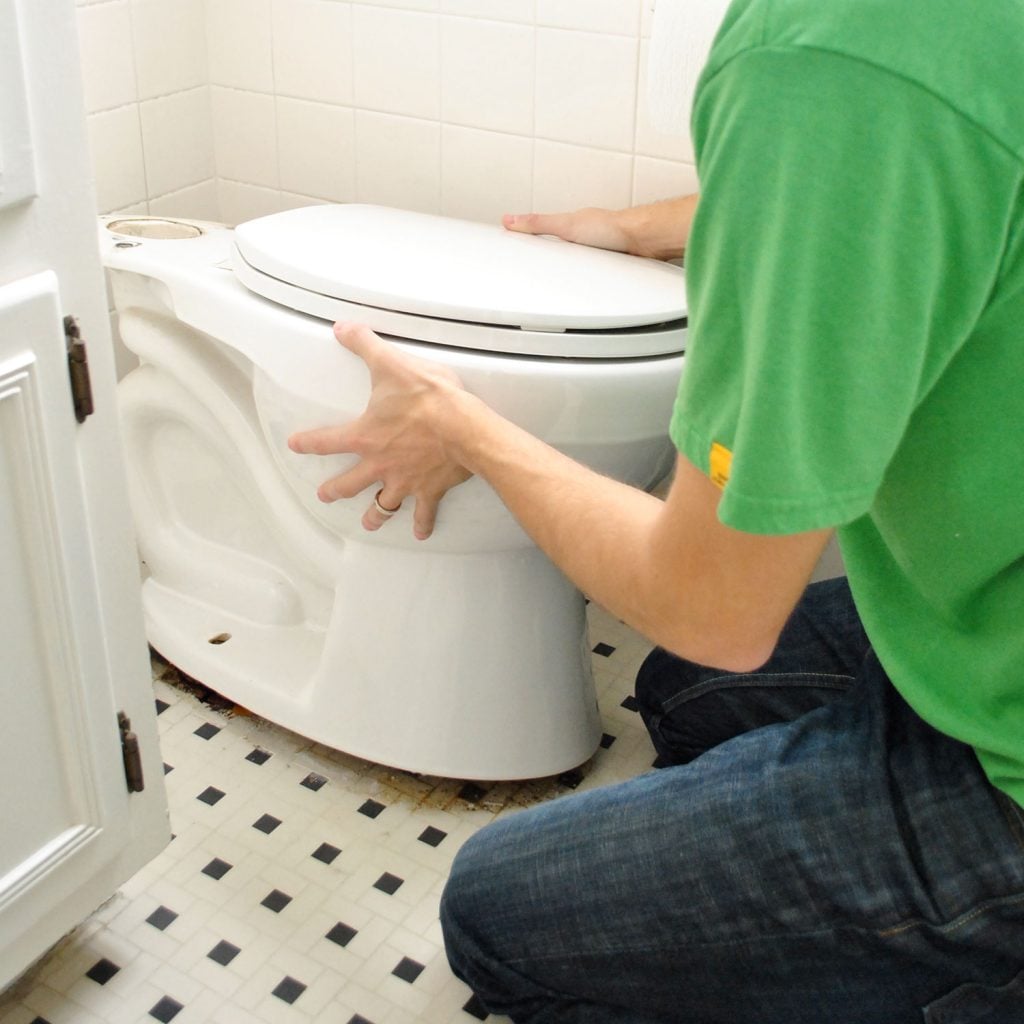
Once you feel it detach, carefully lift the bowl off the bolts and set it aside on an old towel or blanket. You may want to place it on its side or upside down to avoid getting the sticky wax ring on your floor or towel.
Plug the flange hole
As soon as the bowl is lifted away, stuff a spare rag or hand towel into the open hole in the floor where your toilet had been. This will prevent sewer gases from escaping into your home. It also keeps things from falling into the hole in the meantime. Just be sure to remove the rag before installing the new toilet.
Step 4: Prepare The Floor & Flange
Before you install the new toilet, take some time to remove any old wax, caulk, and other debris from the area. The large metal or PVC ring in your floor is the toilet flange (sometimes called the “closet flange” as in water closet flange). You do not need to replace this, assuming its not broken or in poor condition. Just use a utility knife, flathead screwdriver, putty knife, or other tool to remove as much of the old wax around the flange as possible. Remove the rubber gasket as well. Sorry for the gross picture!
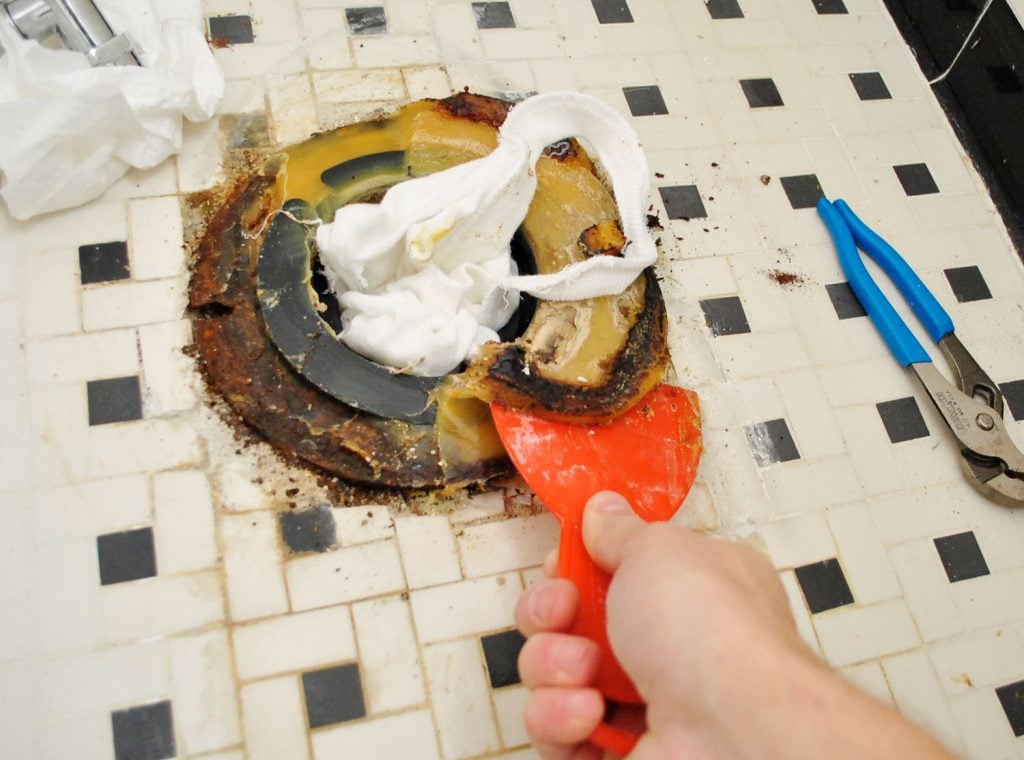
We also recommend removing the old bolts from the flange and using the new ones that come in your wax ring kit. These two bolts, which stick up from the floor, should easily slide out from a keyhole slot in the flange. With the area cleared of wax, slide the new bolts in their place. Many come with plastic clips to help hold them upright.
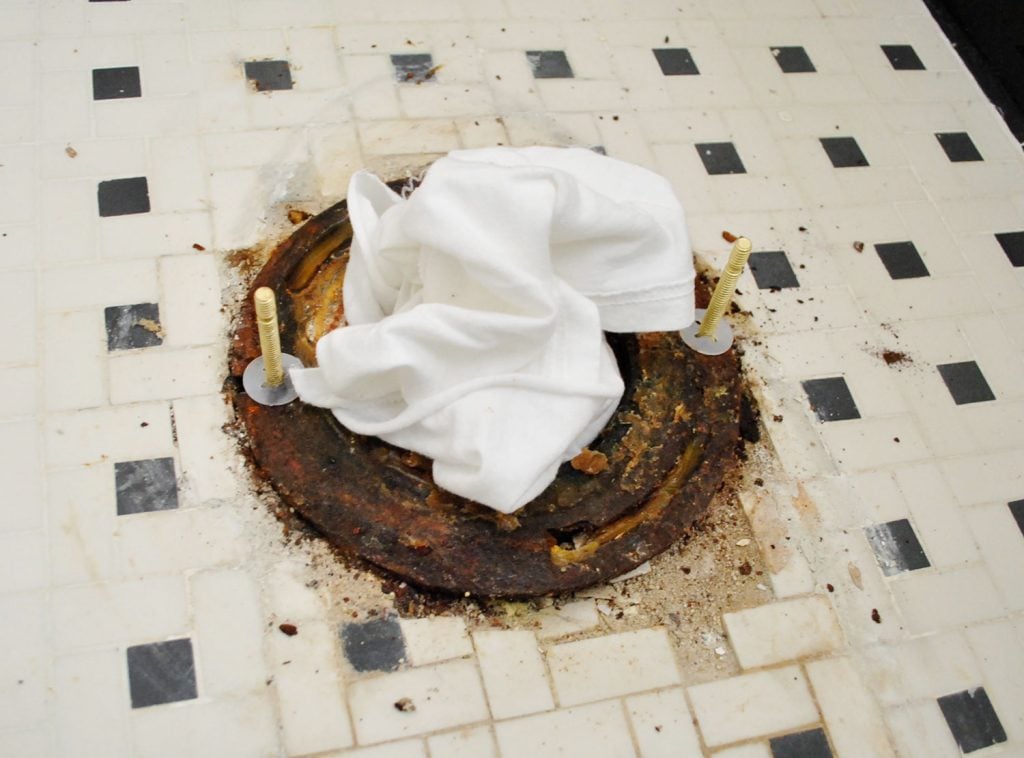
Also, if you are re-installing your current toilet (like we were in the bathroom pictured above) be sure to clean any old wax off of the bottom of the toilet bowl as well.
Step 5: Add The Wax Ring
The wax ring provides a tight seal between your toilet and flange. Most wax rings are reinfoced with a rubber gasket as well. It’s a relatively simple concept but can be a little tricky to get right on your first try. Luckily, many wax ring kits come with two wax rings. We also suggest having both a standard and extra thick wax ring kit on hand, since it’s sometimes hard to determine which is best before your old toilet is removed. Extra thick wax rings are good for bathrooms with thicker tile or deeper set flanges. You can always return what you don’t use.
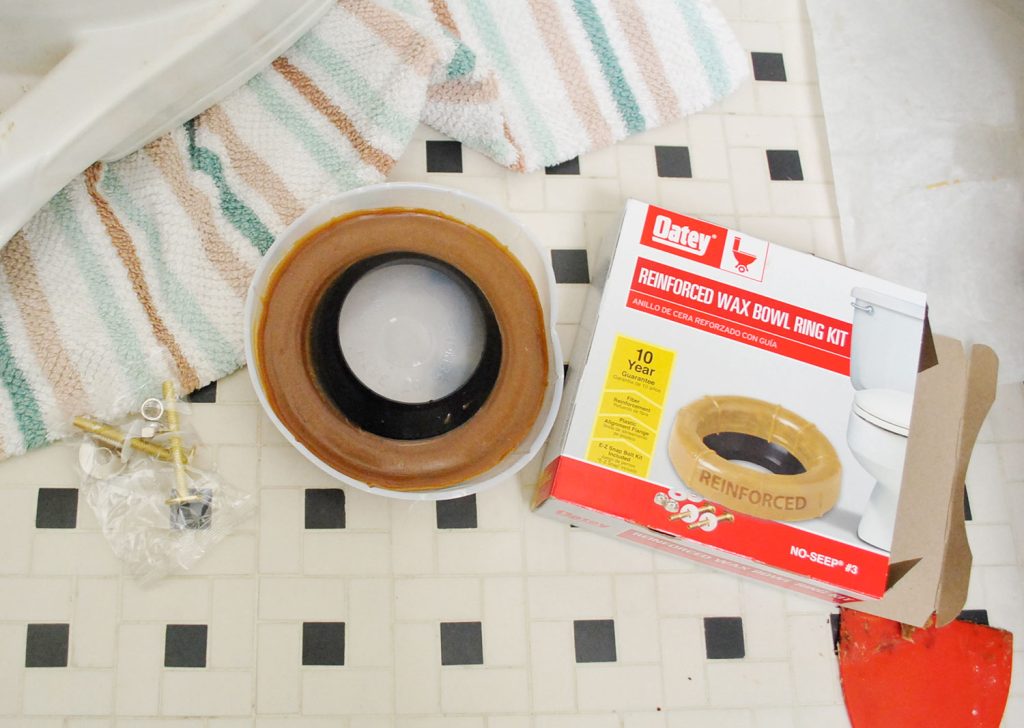
While some people place their new wax ring on the flange, we recommend sticking it to the underside of the toilet bowl. This is easier and ensures a more accurate placement. To do this, lay your new toilet bowl on its side or upside down an old towel or soft blanket. Set the ring over the hole on the bottom of the toilet, wax side touching the toilet. Give it a slight press so that it will hold in place.
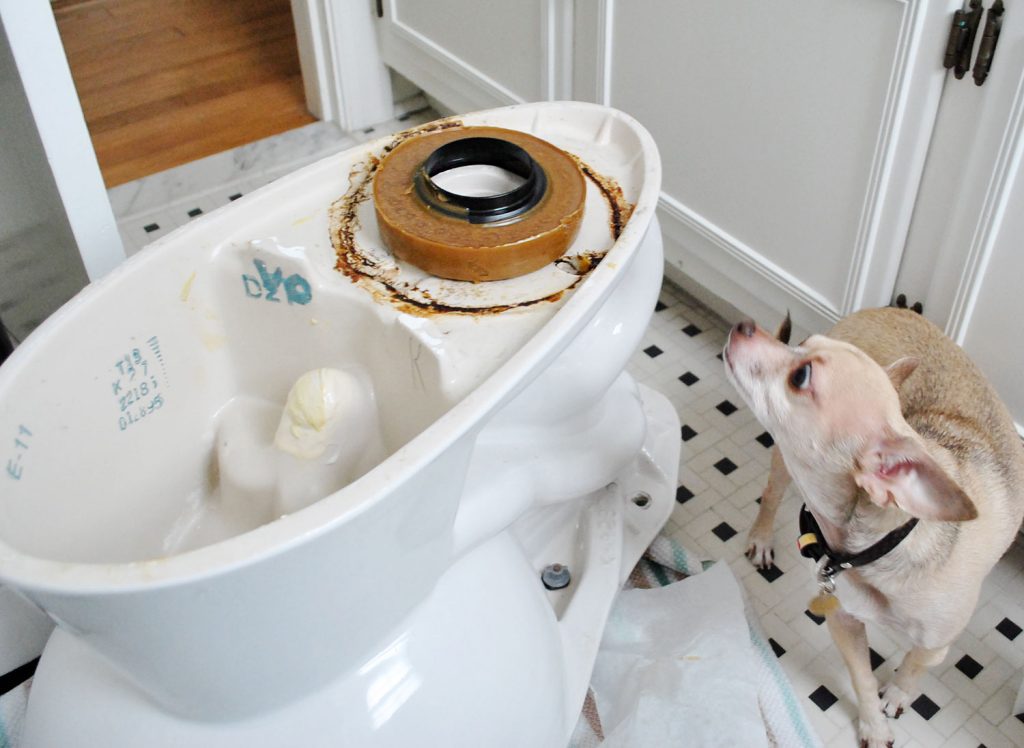
Feel free to let your chihuahua inspect it for quality control.
Step 6: Place The Toilet Bowl
This is the trickiest part of the process, but don’t worry. It’s not rocket science and you can easily do it again if you mess up. With the wax ring stuck to the bottom of the bowl, carefully lower it over the flange so that the bolts stick up through the bolt holes along the toilet base. If lifting the bowl is cumbersome, get a helper to help support the bowl or guide it onto the bolts. Don’t forget to remove the rag from the hole first!
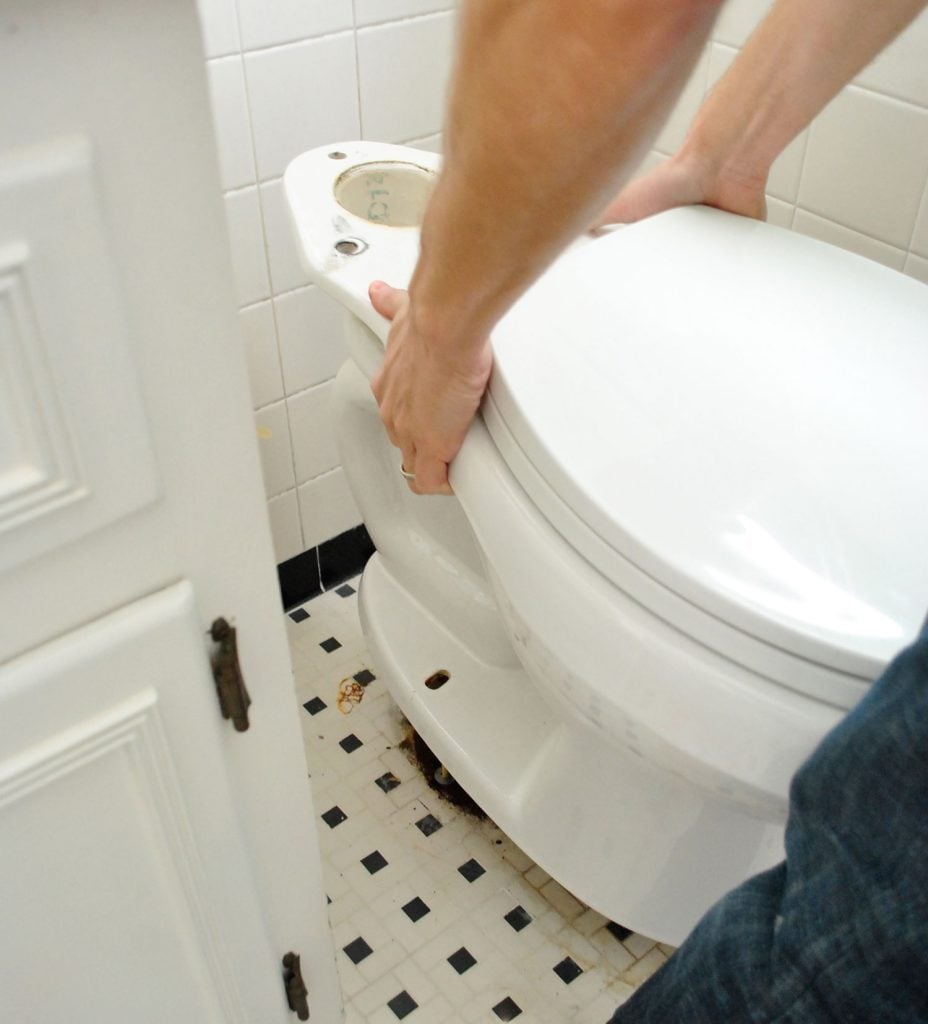
A helpful tip we tried one was placin drinking straws over the bolts. This made it easier to see them and get the bolt holes lined up. Highly recommend!
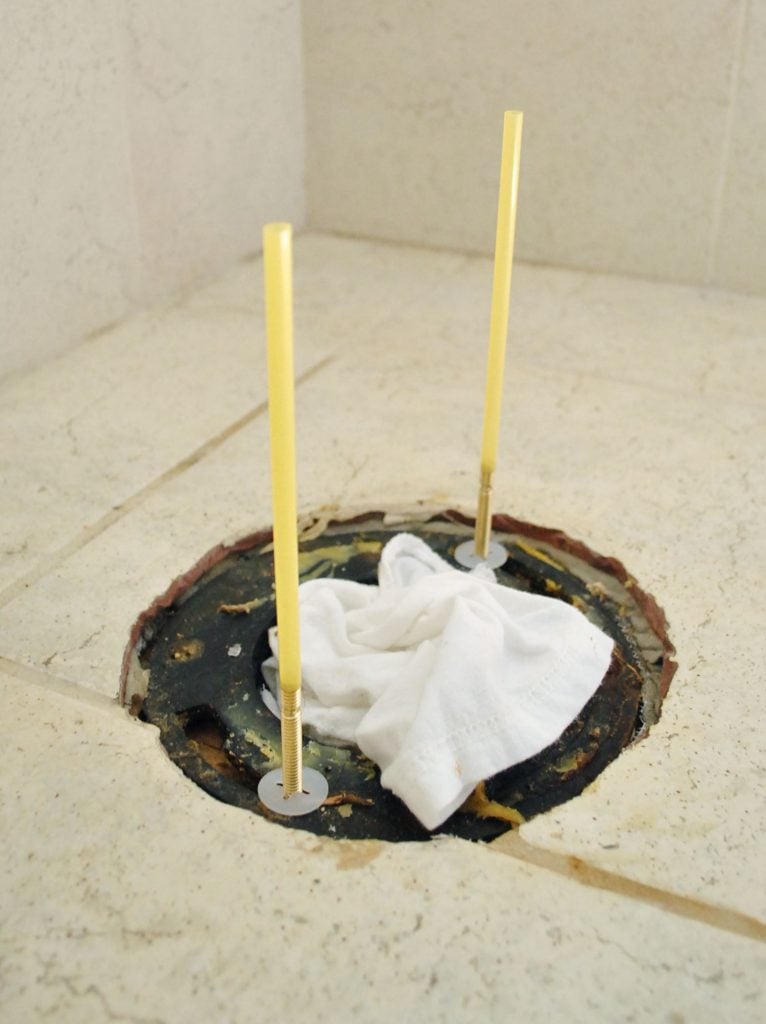
Once you’ve got the bowl placed over the bolts, press down to help the wax ring seal over the flange. If I’m happy with my placement, I also like to sit carefully onto the bowl so that my body weight helps seal the wax ring a bit tighter.
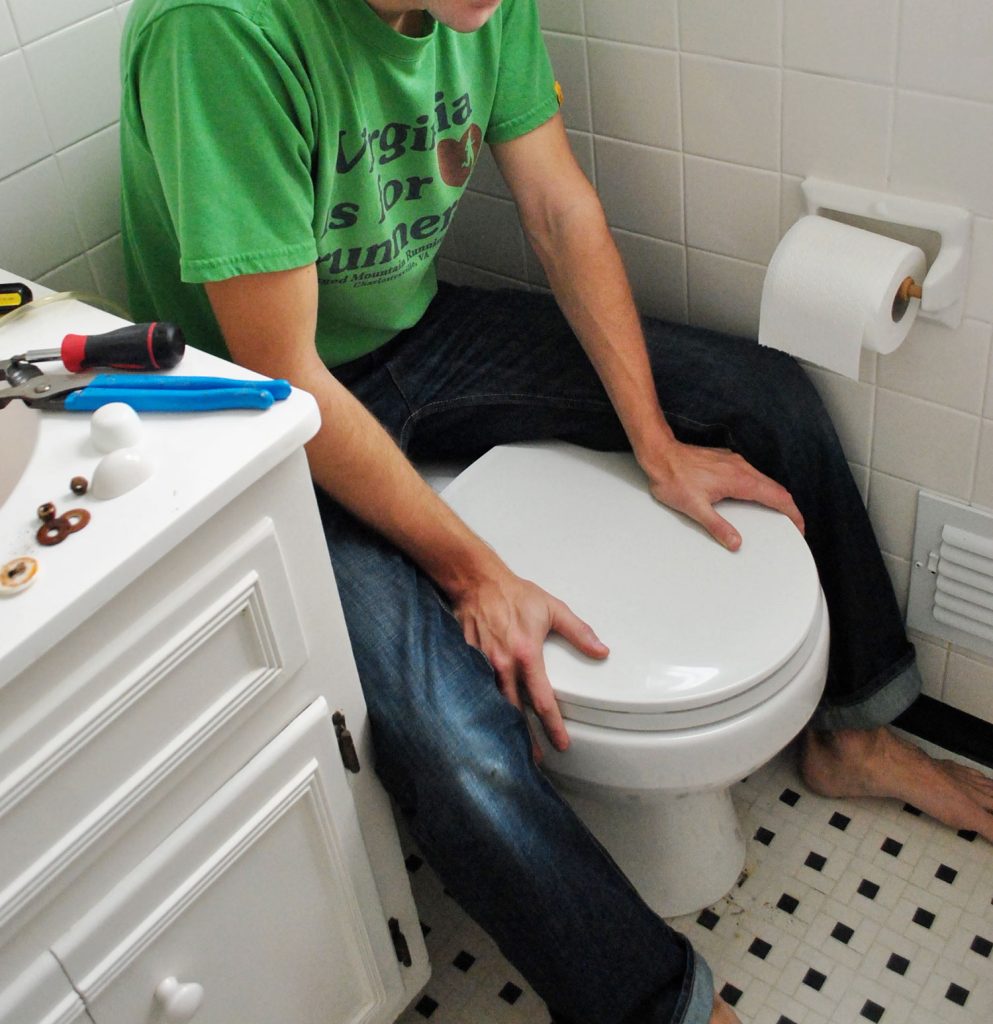
Troubleshooting Placement Problems
I’ve had to redo this step on more than one toilet installation because placement can be a little tricky, especially as your arms get tired from holding a heavy toilet bowl. Bolts can get knocked over or out of place. The bowl can go down crooked. Sometimes your wax ring is too tall. Sometimes it even falls off midair! The main thing to remember is that once a wax ring gets smooshed or deformed in any way, it should not be reused. So don’t try to twist, lift, or shift a misplaced bowl into place. Remove it, grab a new wax ring, and try again. This is why we suggest always having a backup ring or two handy.
Step 7: Bolt The Toilet Bowl
With your bowl set precisely over the bolts, you can now secure it in place. Place the provided washers and nuts over each bolt. You will also probably have a white washer that connects to the plastic bolt cover to slide on as well. Hand-tighten each nut as far as possible.
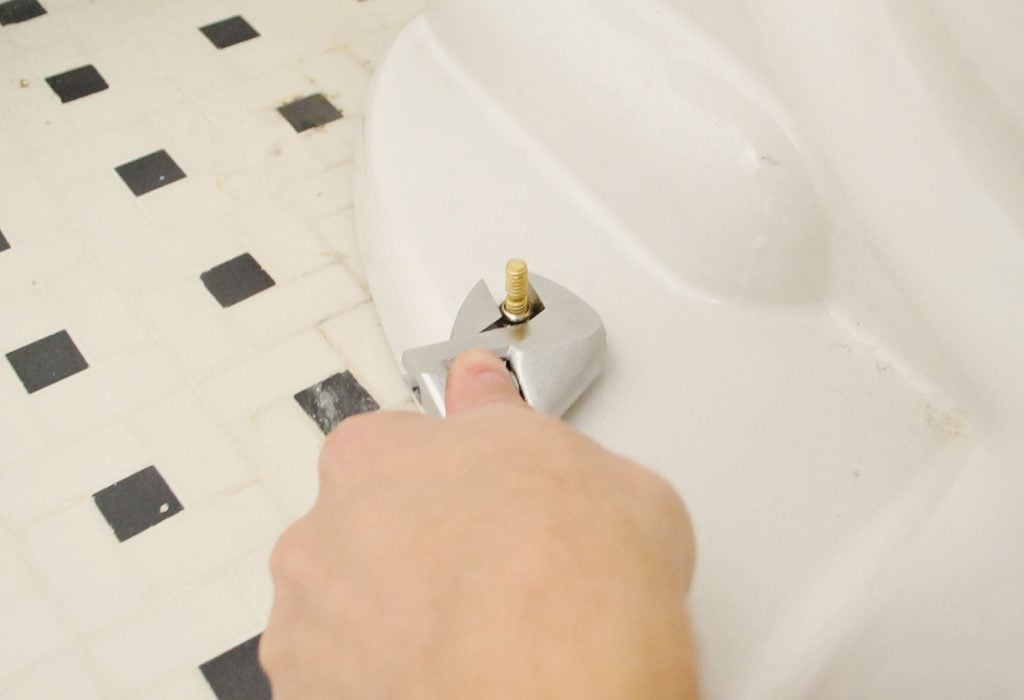
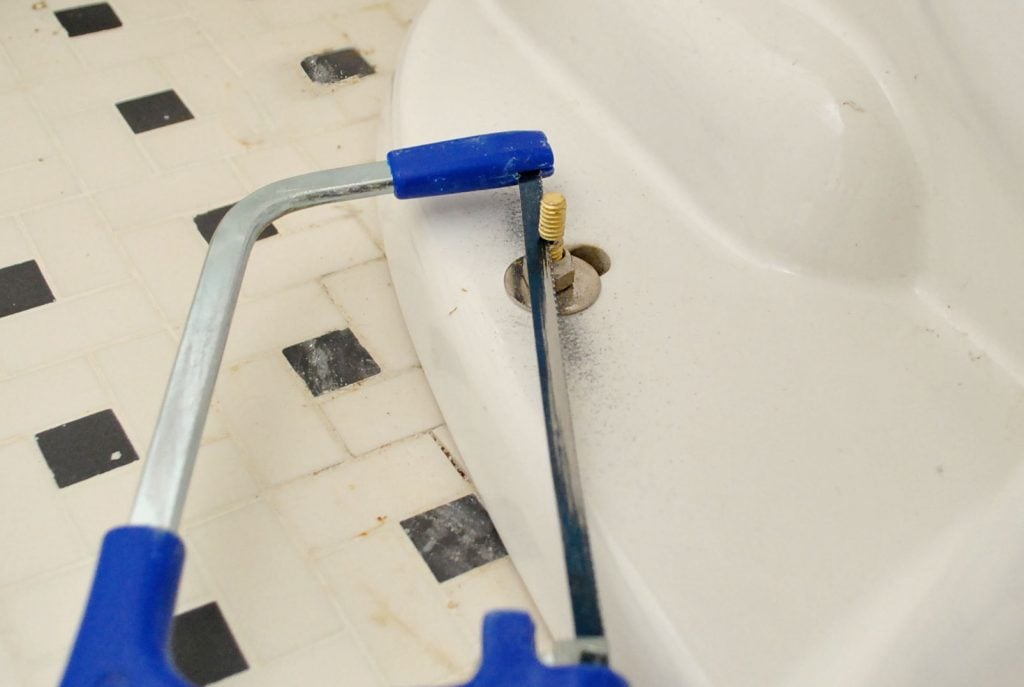
You can use your wrench to tighten each nut a bit further. Just go slow and don’t overtighten, as this can crack the porcelain. Go back and forth between the two bolts, tightening each bit by bit. This helps ensure an even and level result. Use a hacksaw to cut off any excess length of bolt so you can add your plastic covers.
Step 8: Install The Toilet Tank
Similar to what you did when removing the old toilet, you will need to secure the tank to the bowl using the provided tank bolts, nuts, and rubber washers. Just like with the bowl, lift the tank carefully into place so as not crack or damage either piece. The large rubber gasket under the tank should align with the hole at the back of the bowl. Hand-tighten the nuts on the underside as far as possible, then use a wrench and flathead screwdriver to secure them to prevent leaks.
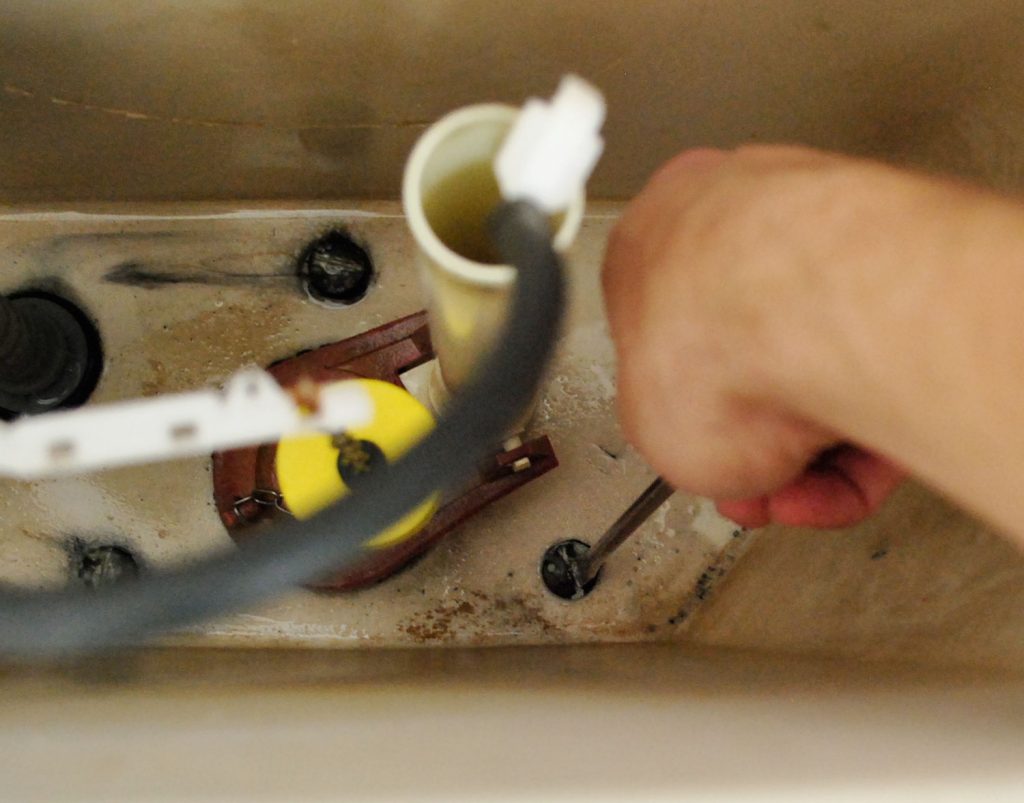
Like with the floor bolts, alternate tightening each bolt bit by bit (there are usually 3 bolts) being careful not to overtighten. I prefer to hold the nut stationery under the tank and twist with a flathead screwdriver form above. You may want to use a level to make sure the tank sits evenly on the bowl.
Step 9: Connect The Water Line
Reattach the water supply line to the bottom of the tank by hand. You can use some plumbers tape if you want to ensure a leak-free connection. Slowly turn on the valve and allow the toilet tank and bowl to fill with water. Flush a couple of times and inspect for leaks. These could appear in various locations:
- Where the water supply line meets the tank
- At the bolts or rubber gaskets between the tank and bowl
- Underneath the bowl around the wax ring
If leaks appear in the first two locations, try slightly tightening the connections. You also can try replacing the rubber washers or gaskets on the tank if they seem compromised. If a leak appears under the bowl (we sometimes slide a paper towel under the edge to check) you will need to replace the wax ring.
Step 10: Finish The Toilet Installation
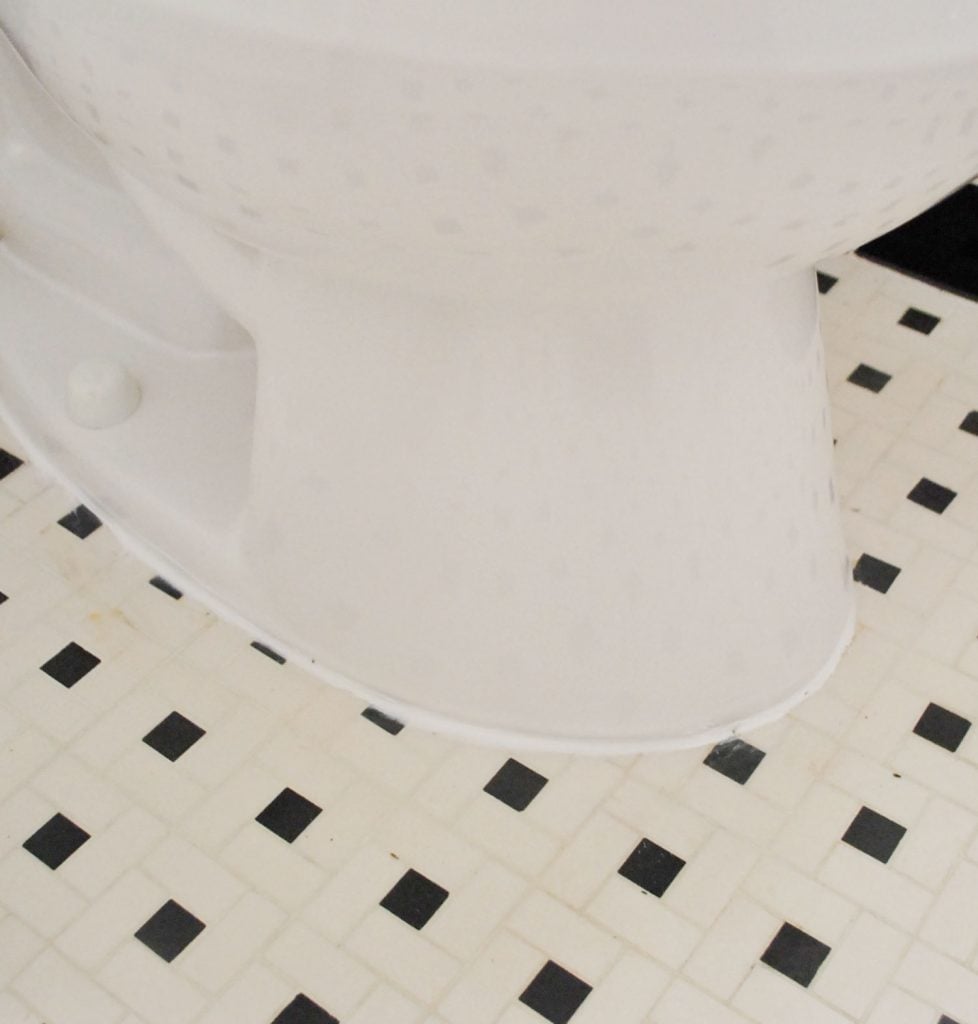
To complete your toilet installation you’ll probably need to attach the toilet seat (which may or may not come with your toilet) and possibly adjust the flushing mechanism in the tank to your liking. We also like to put a bead of white silicone caulk around the toilet base.
Bonus Step: Get Rid Of Your Old Toilet
Your new toilet is in. Great! But now what do you do with the old one? Don’t throw it in the trash (unless it’s damaged or otherwise unusable). Instead, we suggested either donating it or selling it. Charities like Habitat for Humanity are happy to take old toilets, just give them a good cleaning first. We also once sold an old toilet on Craigslist for about $80!
Toilet Installation FAQs
Can I install a toilet myself?
Yes! This is definitely a beginner-friendly plumbing DIY project and can be completed by one person, assuming they can lift the pieces without trouble. Most toilets weigh between 80 – 120lbs, but picking a two-piece toilet makes the separate bowl and tank pieces easier to maneuver. However, we do find the process goes smoother with a helper.
Do I need a plumber to install a toilet?
If any of the steps described above sound beyond your skill or comfort level, please don’t hesitate to call a professional. However, we have DIYed several toilet installations – even as brand-new, first-time homeowners. So as long as you can be patient and follow directions, we have confidence in you!
Do I need to caulk around my toilet?
Yes, it is recommended to caulk around the base of the toilet. It not only looks nicer, but it’s also more sanitary and can help keep your toilet from rocking. A bead of silicone caulk around the base keeps things from sliding or leaking under your toilet (think your kids’ potty-training misfires) which can lead to mold and unwanted smells.
Other Toilet How-Tos
Now that you’ve learned how to install a toilet, here are some other tutorials and information you might be interested in.
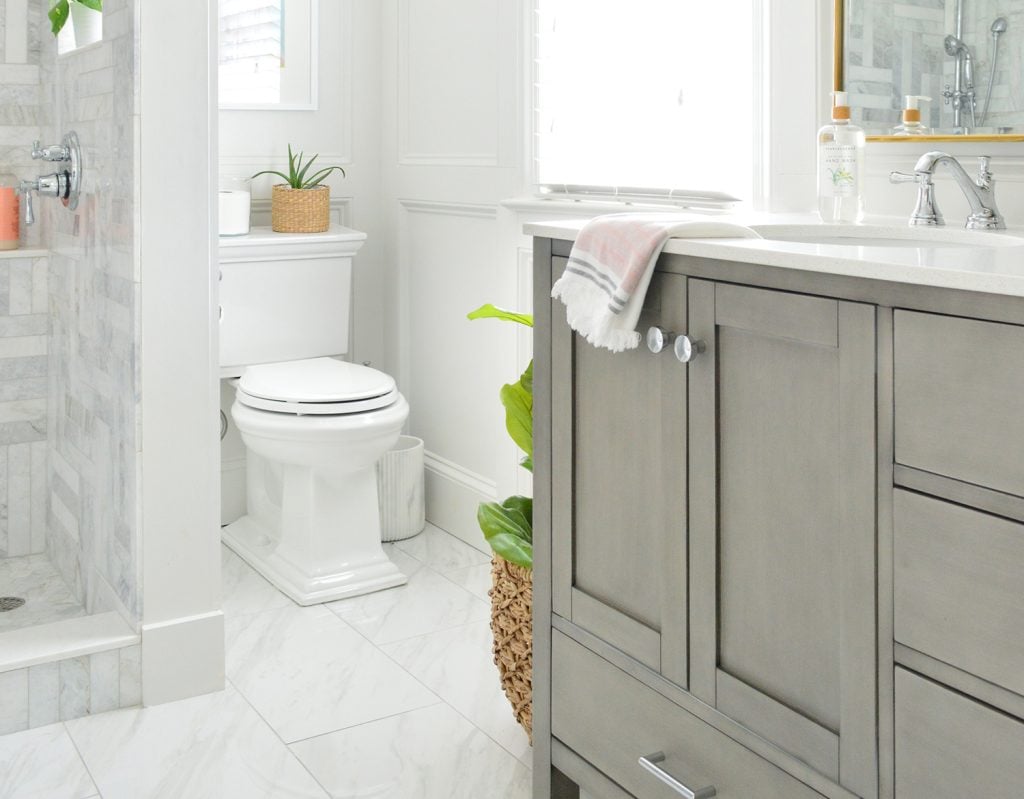
- Our Favorite Toilet (Yes, We Have One!)
- How to Fix A Rocking Toilet
- How To Unclog A Bathtub Drain Without Chemicals
- Convert A Toilet To Dual Flush
- Fixing A Backed Up Toilet Line
*This post contains affiliate links, so we may earn a small commission when you make a purchase through links on our site at no additional cost to you.